Quick answer
Wobble in a dresser or bookshelf usually starts in one of three places: the joints (how the panels connect), the back panel (whether it actually holds the box square), and the base (whether the piece sits flat). Check those three things, plus what the panels are made of, before you buy, and you'll catch most of what turns into a two-year wobble. Wobble and tip-over are different problems, though: even a rock-solid dresser should be anchored to the wall.
What actually causes wobble
A new piece rarely wobbles in the showroom. Wobble develops as small amounts of play in the joints get worked back and forth by everyday use — opening drawers, leaning on a shelf, sliding the piece out to vacuum behind it. A few weak points cause most of it.
Loose or minimal joints
The sideways flex you feel as wobble is called racking: a rectangle trying to lean into a parallelogram. Furniture held together mainly by a few screws driven into panel edges has less to resist racking than furniture with interlocking joints — dowels combined with cam locks, mortise-and-tenon joints, or dadoes, where one panel sits in a groove cut into another. Every joint has a little play on day one. What matters is how much that play grows under repeated stress.
A back panel that isn't doing structural work
On well-built case furniture, the back panel fits into a rabbet (a stepped recess along the back edges) or a groove, and it's glued, screwed, or nailed along its full perimeter. Fastened that way, it keeps the whole box square. On many lower-cost pieces, the back is a thin sheet tacked flat onto the back edges with a few nails or staples. It helps at first, but once those fasteners loosen, it does little to stop racking, and the wobble shows up sooner.
An uneven base
A dresser or bookshelf that doesn't sit flat will rock even if the piece itself is perfectly square, and that rocking works the joints loose. This is common on older floors, including in many Pittsburgh homes where decades of settling have left floors out of level.
Panel material and thickness
Thinner panels flex more than thicker ones under the same load, and particleboard is less forgiving than plywood or solid wood once a screw hole starts to loosen. The same joint design will wobble sooner in thin, low-density panels. For a full breakdown, see our guide to particleboard, MDF, plywood, and solid wood.
What to check before you buy
- The back panel. Is it set into the sides and top, and fastened all the way around, or just tacked on? Ask, or look at close-up photos of the back.
- How shelves and dividers connect. Fixed shelves set into grooves add rigidity. Adjustable shelves on small pins are convenient but don't help keep the case square, so look for at least one fixed shelf in a tall bookcase.
- A press test, if you can see it in person. Gently push a top corner side to side. Noticeable flex, or a gap opening at a joint, means the piece will likely loosen further.
- The feet. Adjustable levelers are a plus for older, uneven floors. With fixed feet, check that all four sit flat where the piece will live.
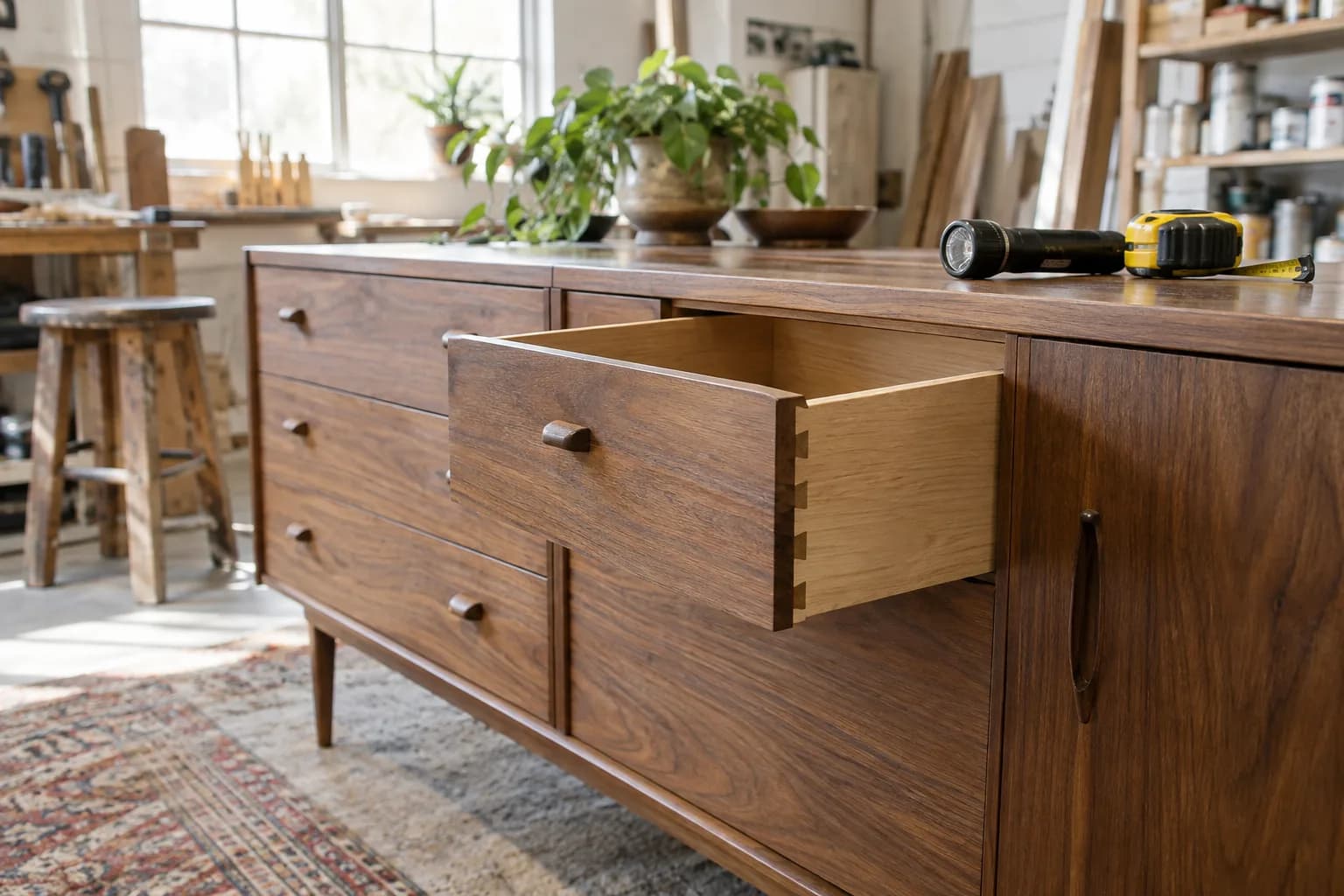
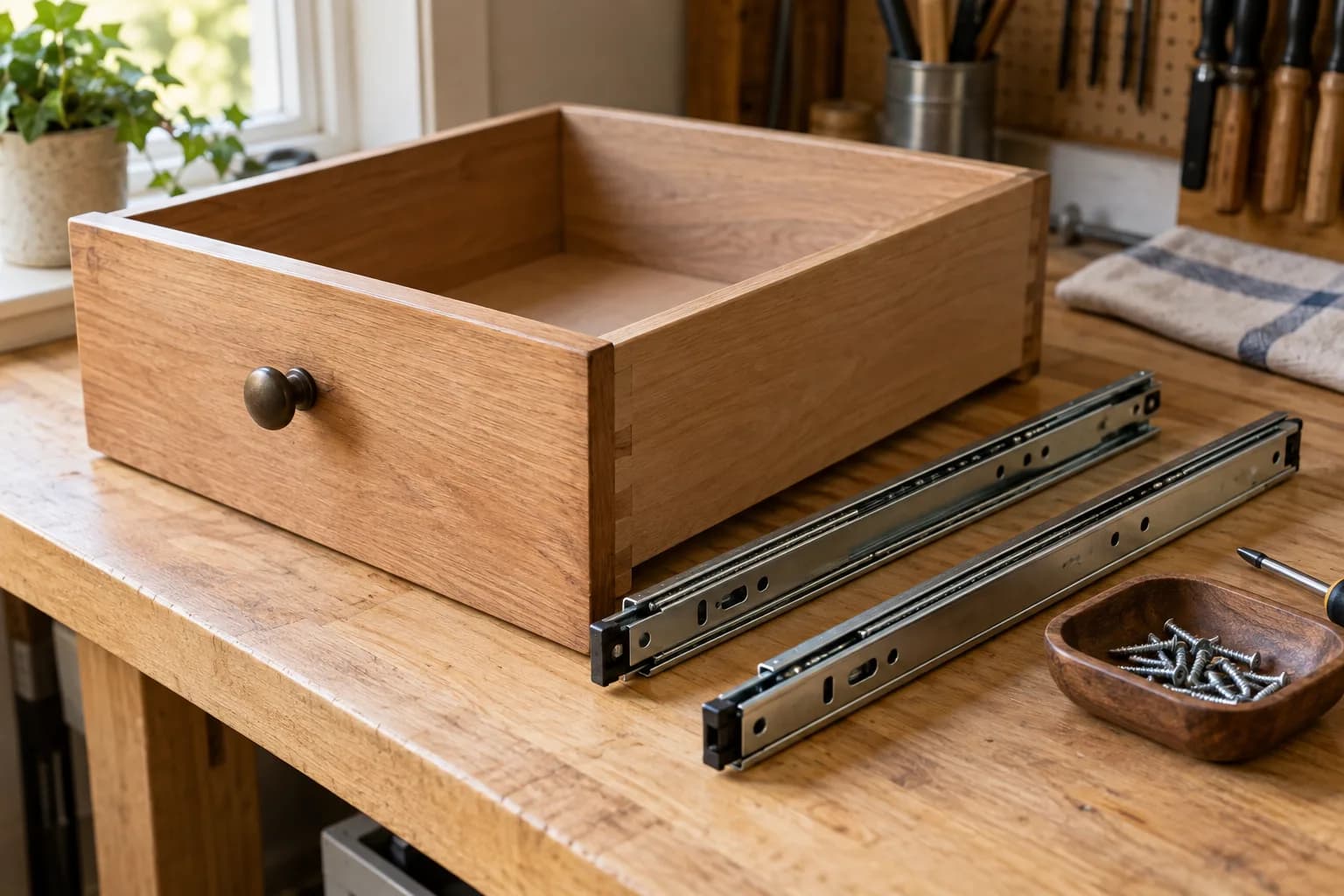
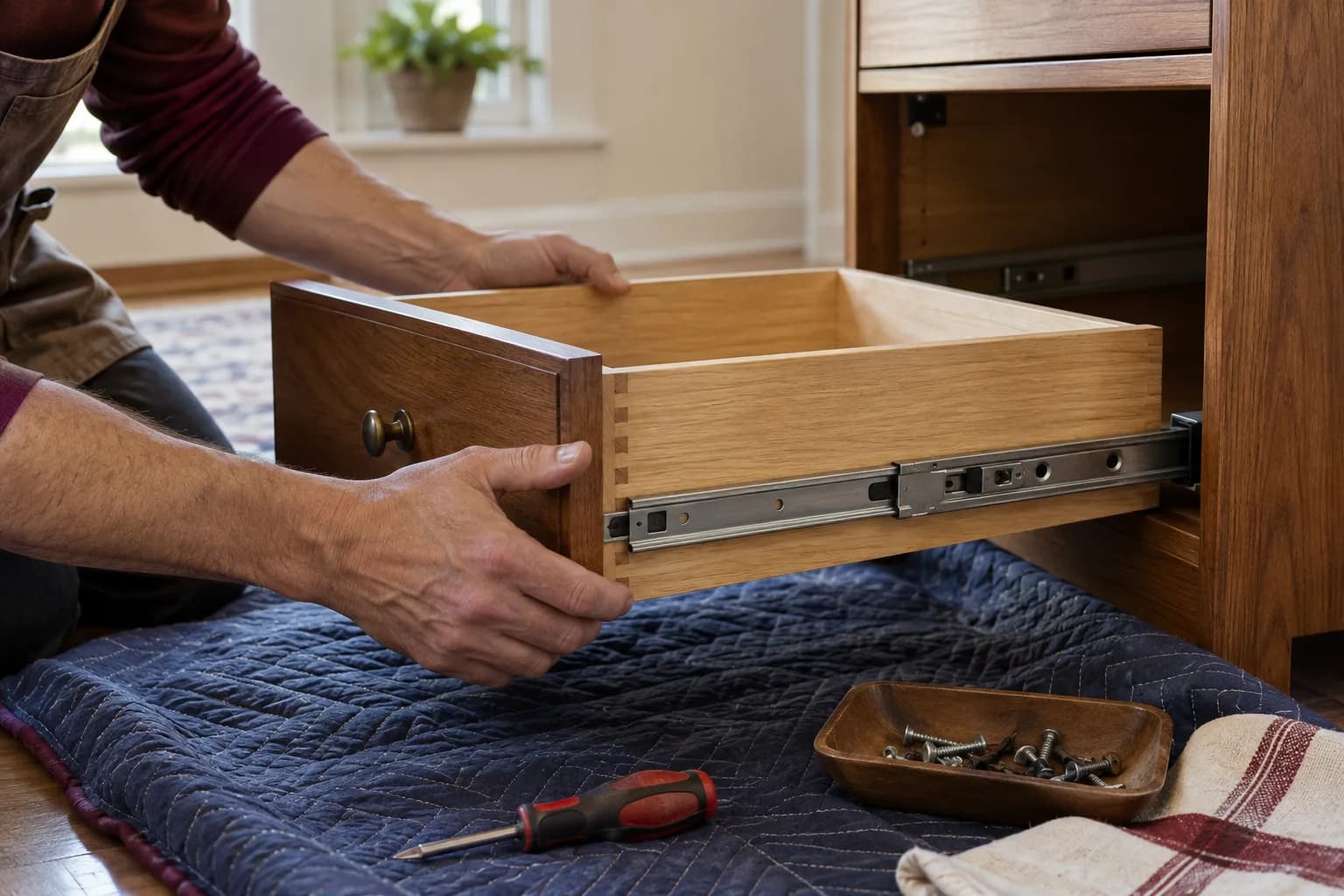
- Drawer construction. Drawers that run on metal slides and have sturdy boxes put less strain on the case than drawers that drag or bind.
- Proportions. A tall, narrow piece is more prone to racking and tipping than a shorter, wider one holding the same amount.
Tall dressers, bookshelves, and tip-over risk
Wobble is a durability problem. Tip-over is a safety problem, and it matters most in homes with young children.
In 2023, following the federal STURDY law, the U.S. Consumer Product Safety Commission adopted the ASTM F2057-23 standard as a mandatory safety standard for clothing storage units, effective September 1, 2023. According to CPSC:
- It applies to free-standing clothing storage units such as dressers, chests of drawers, and armoires that are at least 27 inches tall, weigh at least 30 pounds, and have at least 3.2 cubic feet of enclosed storage — for units manufactured after September 1, 2023.
- It includes stability tests with the unit on carpeting, with loaded drawers and multiple drawers open, and tests simulating the weight of children up to 60 pounds interacting with the unit.
- An anti-tip device meeting ASTM F3096 must be packaged with covered products.
- Bookcases and entertainment furniture are not within the scope of this rule.
Two practical takeaways. First, a dresser made before that date wasn't required to meet this mandatory standard, so an older or secondhand piece deserves extra caution. Second, CPSC recommends that consumers anchor furniture, including dressers, securely to the wall — and since bookcases aren't covered by the dresser rule at all, anchoring them is just as important. Use the anti-tip kit that came with the piece, fastened into a stud or with hardware suited to your wall. Plaster walls in older homes need more care; our guide to anchoring furniture and TVs against tip-overs covers the details.
Fixing a wobble you already have
Not every wobbly piece needs replacing. Common fixes, roughly in the order worth trying:
- Level it first. If the floor is the problem, shims or adjustable feet can stop the rocking without touching a joint.
- Tighten the hardware. Cam locks and screws loosen over time. Retightening, or replacing worn hardware, fixes a surprising number of wobbles — just don't overtighten screws in particleboard.
- Refasten the back panel. Adding screws or small nails along the full perimeter, into the sides, top, and bottom, can bring back a lot of rigidity.
- Add corner braces. Small metal L-brackets or wood corner blocks in inside corners stiffen a case that was never very rigid.
- Reglue loose wood joints. On solid wood or plywood, cleaning out old glue and regluing under clamp pressure often makes a loose joint solid again.
Once particleboard around a screw hole has crumbled, options narrow. Relocating a bracket to fresh material or using a fitting designed for particleboard can sometimes save the piece, but at that point it's worth weighing the time against the value of the piece.
Inspect the cabinet separately from the floor
Before deciding that a new cabinet is defective, establish what is moving. Does the entire piece rock on its feet, does the cabinet body rack sideways, or does a drawer feel loose while the frame remains still? These are different symptoms. Check the assembly instructions and the intended leveling method rather than driving random shims or additional screws into the furniture.
A visual inspection should include the base, corners, back, and major connectors. Look for a damaged panel edge or a fitting that cannot seat correctly. Doors with uneven gaps may indicate a needed hinge adjustment, but they can also reveal that the cabinet was not assembled square. Adjusting a door to disguise an out-of-square cabinet may leave other parts working poorly.
Do not evaluate tip-over protection by rocking or pulling on a loaded dresser. Stability during normal operation and the specified anchoring system both matter. Keep children away during inspection, and avoid using a piece whose structure or required securing arrangement is incomplete.
Check function before filling it
An empty walkthrough makes defects easier to see and keeps returns simpler. Open each drawer through its intended travel, check that runners engage as described, and verify that shelves rest on the correct supports. Make sure the back panel and any specified braces are installed as the instructions require. Small pieces that seem cosmetic can have a role in keeping the assembly aligned.
Photograph and report damaged parts before attempting a repair that could complicate a return. If a connector spins in a damaged hole or a panel is cracked, extra tightening can make the situation worse. The next step may be a correct replacement part, not glue or a larger screw. Keep the hardware inventory and packaging until that decision is made.
When you load the piece, follow the manufacturer's limits and intended use. A bookshelf and a display cabinet of similar size may be designed for different contents. Avoid assuming that an evenly distributed rating means a shelf can support the same weight concentrated in one small spot. Ask for clarification where the manual is unclear.
Choose repair, replacement parts, or return deliberately
A useful repair assessment explains which part is wrong, what replacement is available, and whether the repair restores the intended assembly. A loose adjustable foot is a different proposition from a broken cabinet side at a load-bearing joint. Compare the proposed repair with the seller's return route before spending money on an improvised fix.
For a hypothetical older dresser, keeping a well-made cabinet and replacing an identifiable drawer runner may be reasonable. For a newly delivered piece with several damaged joints and missing parts, returning it may avoid a sequence of uncertain repairs. Neither decision follows from age alone.
Keep a record of the model, replacement part numbers, and anchoring instructions. After the piece is moved, revisit leveling and the securing arrangement rather than assuming they remain correct in the new location. Good initial assembly is only one part of keeping furniture useful as the room changes.
FAQ
Is a heavier dresser always a sturdier one? Not necessarily. Weight can come from dense composite panels rather than strong joinery. Treat weight as one signal among several, and look at the back panel, joints, and drawers too.
Can I tell whether a piece will wobble from online photos? Not with certainty, but photos of the back, interior, and drawer boxes, plus a clear materials list, give you a far better read than dimensions and finish alone.
Should I anchor a bookshelf even if it doesn't wobble? Yes, if it's tall enough to tip, especially with children in the home. Anchoring addresses tip-over, which is separate from everyday wobble, and CPSC recommends anchoring furniture to the wall.
Does anchoring fix wobble? It can reduce the rocking you feel, but it doesn't tighten loose joints. Fix the wobble at its source, then anchor the piece.
Let us take a look
If a piece you own has started to wobble, or you'd like a tall dresser or bookshelf assembled and anchored properly, request an estimate and we'll look at what's loose and the most sensible fix. See everything we handle on our furniture services page.