Start with the parts you cannot see in the listing
A secondhand desk can be an excellent find when its top is scratched but its frame, hardware and joints are sound. A nearly spotless dresser can be a poor choice when drawer bottoms are swollen or the fasteners no longer hold. Inspect function and completeness before deciding whether the finish suits your room.
Treat the visit as a decision point, not a pickup appointment you must complete. Ask for permission to inspect the furniture normally, bring a tape measure and flashlight, and leave yourself time to walk away. A seller's description is useful background, but it does not replace examining the actual piece.
Ask for a small set of useful photos
Before traveling, request an overall view, the back, the underside if safely accessible, hardware close-ups and the manufacturer's label. Ask which pieces have been removed and whether there have been repairs or repeated disassembly. For a dining table, that includes extension leaves, support rails and locking hardware; for a bed, it includes the center support and every specified leg.
A clear model number helps you locate the assembly manual and check the CPSC recall database. Compare identifying details with any recall notice rather than assuming a similar product name is enough. If a relevant recall applies, follow its remedy instructions; do not accept a seller's improvised repair as evidence that the issue is resolved.
Write down three questions that would change your decision. Examples are whether a tabletop separates for transport, whether proprietary drawer clips are present, and whether a bookshelf has its original backing. This keeps the conversation focused on practical uncertainties.
Inspect from the floor upward
View the piece in its normal position on a reasonably even surface. Look at the legs, feet and base before opening anything. Are feet missing? Is one corner propped up? Does the frame visibly lean? An uneven floor can create a misleading wobble, so ask about the surface before concluding the furniture itself is twisted.
Examine joints without deliberately stressing them. A visible gap, loose connection or fresh glue around a joint deserves an explanation. Check whether bolts and screws sit where the manual shows them. Mixed fasteners are not automatic proof of a bad repair, but an unexplained long screw through a thin panel is a reason to pause.
Do not climb on a chair or shake a tall cabinet to test its strength. If the piece appears unstable, stop the inspection. A quick purchase visit cannot establish the safety of a damaged load-bearing chair or an altered bed frame.
Open each drawer and door separately
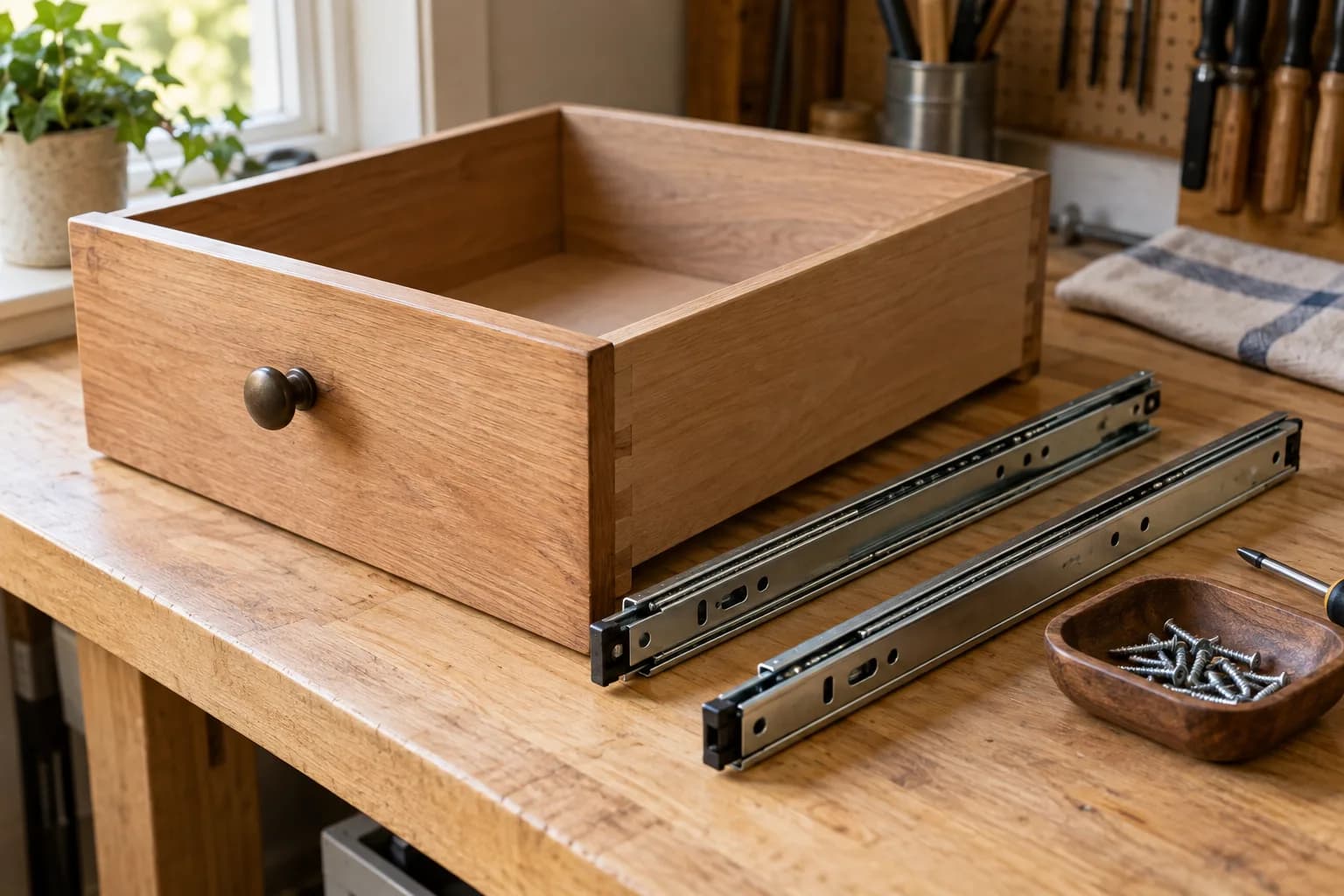
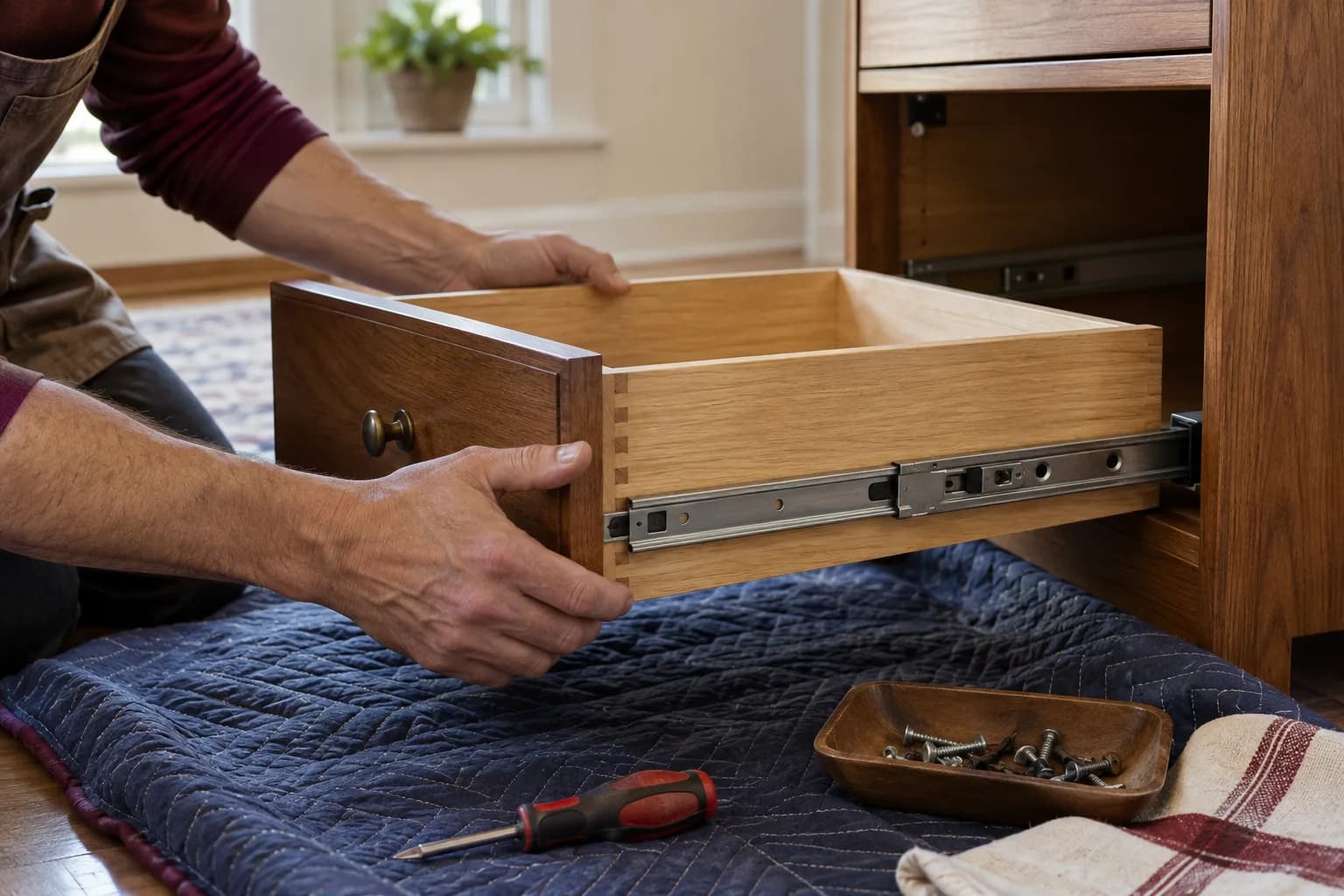
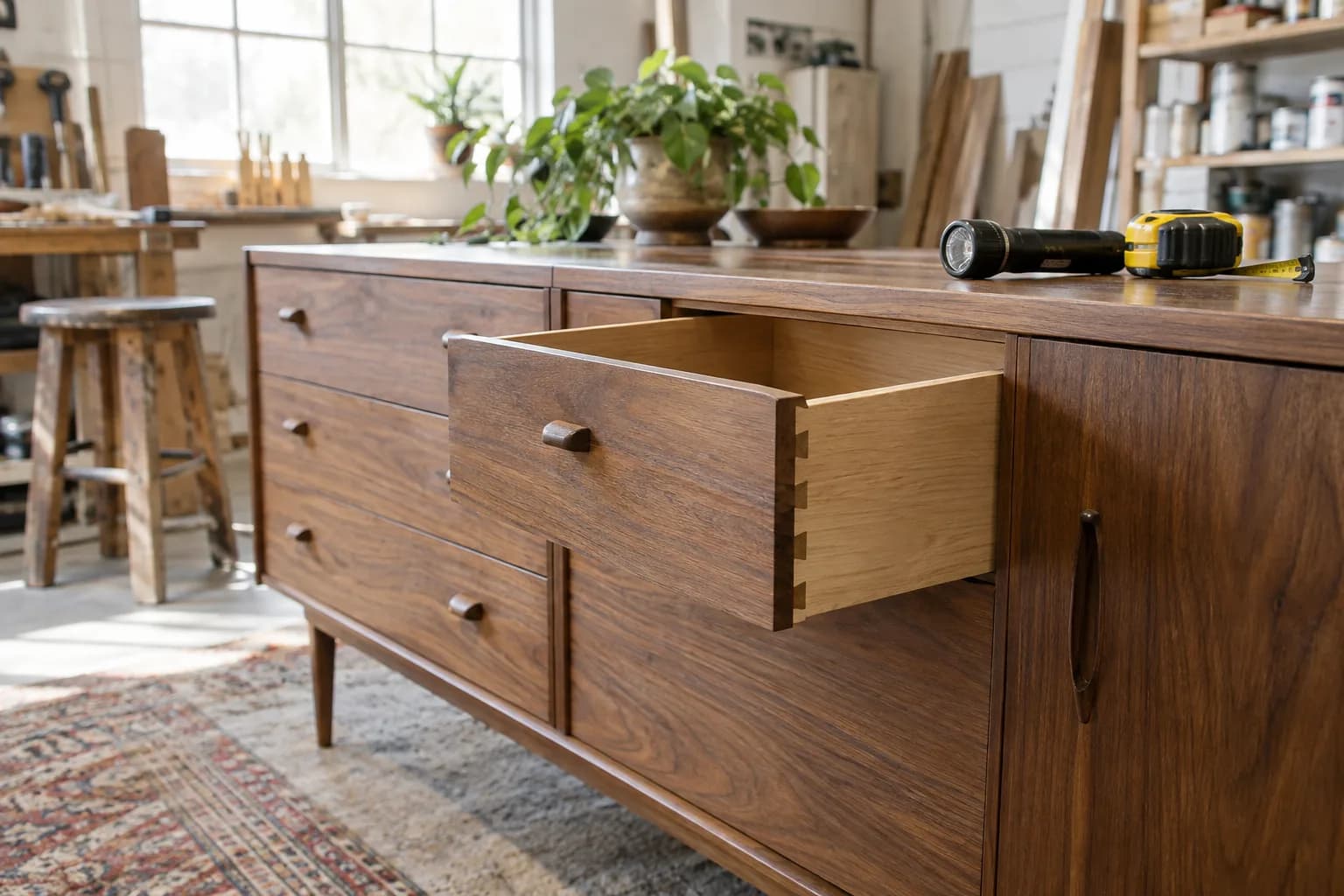
Operate drawers one at a time while the furniture remains stable. Check the beginning, middle and end of travel. Note scraping, tilted fronts, a drawer that lifts off unexpectedly, or a soft-close mechanism that works on one side only. Ask to see the underside of a removable drawer only if the seller can remove it according to its instructions.
Look inside for separated corners, sagging bottoms and screw holes that have enlarged. A drawer that functions empty may still have a damaged bottom; do not load it with your body weight or random heavy objects as a test. On doors, inspect the hinge attachment points and see whether the doors close without being lifted by hand.
A hypothetical dresser with one missing handle and smooth, intact drawers presents a different project from one with matching handles but damaged slide mounts. Put the handle on a shopping list. Treat damaged attachment material as an unresolved repair until someone has assessed it.
Separate cosmetic wear from material damage
Check edges, seams and areas near the floor. Swelling, crumbling material, peeling layers and lifting veneer deserve closer attention than a light surface scratch. Pay particular attention around old spills and the backs of furniture that stood against an exterior wall.
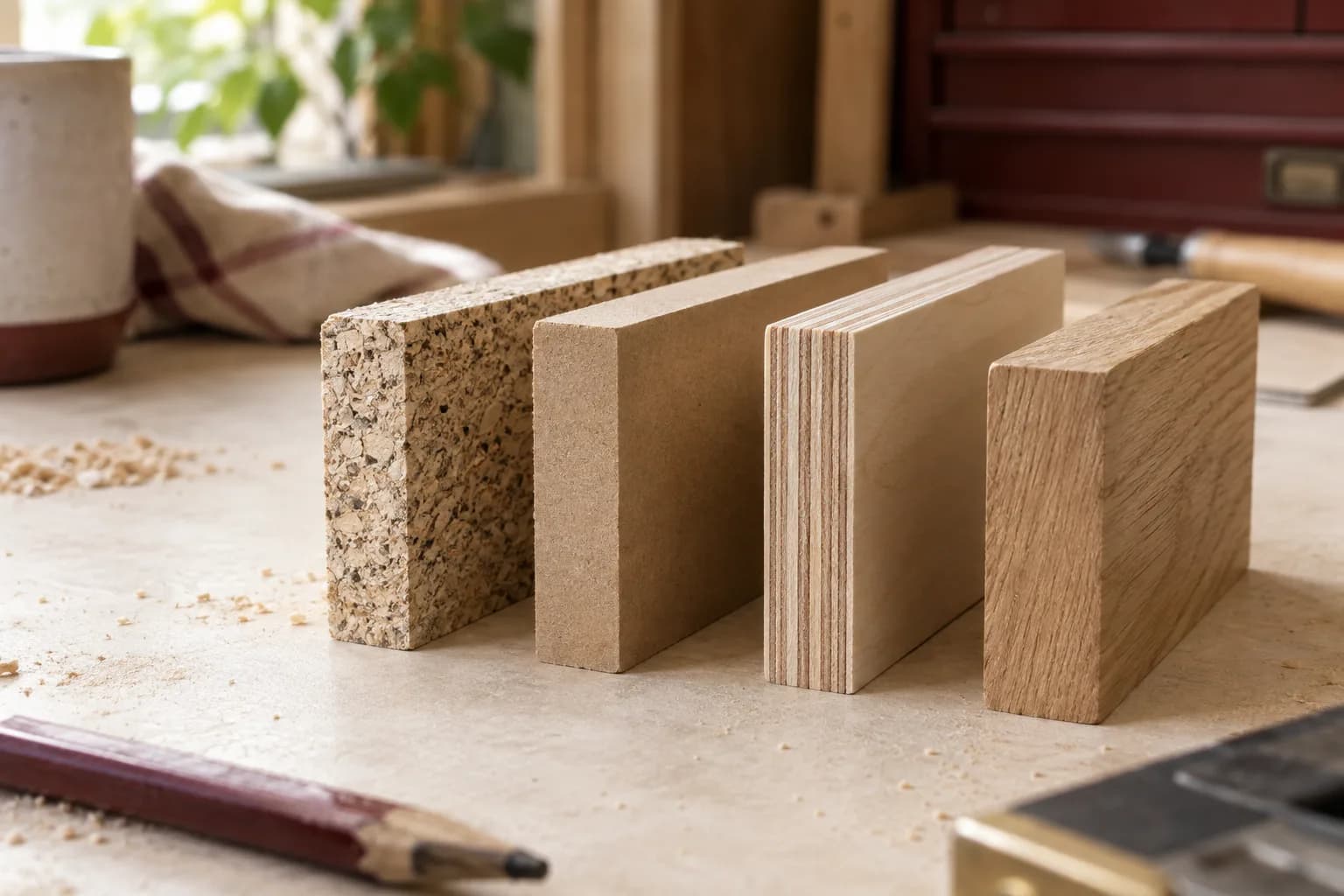
Do not assume a wood-grain surface is solid wood. Our furniture materials guide explains how common substrates differ. For buying purposes, the useful question is whether the material at a damaged connection can support the intended repair, not whether the furniture sounds premium in an advertisement.
Smell the interior with drawers open. A strong fragrance can make an underlying odor harder to judge. If smoke, dampness or another persistent odor would make the piece unsuitable for your home, do not rely on an untested cleaning plan to rescue the purchase. Assess the furniture as it is today.
Check for pests before bringing anything home
The EPA specifically recommends checking secondhand furniture, beds and couches for signs of bed bugs before taking them home. Inspect accessible seams, crevices and hidden areas, and treat suspicious evidence as a reason to stop. An ordinary visual check cannot certify a piece pest-free. See the EPA's prevention guidance.
Avoid turning this inspection into a treatment experiment. Spraying an unknown chemical on upholstery or leaving a piece outside for a while does not establish that a pest problem is resolved. If there is credible concern, pass on the item or obtain appropriate professional advice before arranging transport.
For upholstered furniture, also consider whether you can inspect beneath cushions and along the underside without damaging fabric. If the seller will not allow a reasonable inspection, you have less evidence on which to base the purchase. A low asking price does not fill that gap.
Account for missing hardware and safe setup
Make a written inventory against the manual where possible. Separate ordinary replaceable knobs from connectors, brackets and supports specific to the product. Photograph the remaining parts and confirm availability before paying. A bag labeled "all screws" is worth checking against the diagrams.
Plan tip-over prevention at the destination. CPSC's Anchor It guidance recommends securing furniture and TVs appropriately. A secondhand purchase may be missing its restraint or instructions; that is something to resolve before use, not a reason to skip the step.
If a bed's original support arrangement cannot be established, do not invent one from a few spare boards. If a cabinet has already lost strength around its connectors, another disassembly may introduce further problems. Ask whether it can be transported intact within a properly planned move.
Measure the whole journey
Record the furniture's width, depth and height, including projecting handles and feet. Compare those measurements with the route through doors, corners and stairs, and with the final room. Our door, stair and elevator measuring guide helps organize that check.
Confirm who is responsible for pickup and transport. Assembly help does not automatically include moving a heavy item upstairs. Do not commit to a large purchase because it fits in the room while leaving the entry route unresolved.
Make the final decision on total effort
Before paying, answer these questions:
- Can I identify the item and resolve any relevant recall questions?
- Are the main joints, panels and functional parts sound?
- Are missing components available and compatible?
- Is there unresolved pest, odor or moisture concern?
- Can the item travel safely to its destination?
- Is safe assembly and anchoring practical in the intended room?
Keep photos and the manual with the listing details. If the answer depends on a repair, establish that scope first. For help assessing assembly requirements, see furniture assembly or request an estimate with the model, condition photos and a clear list of missing parts.