A sticking drawer needs a diagnosis before a new slide
A drawer can catch because a utensil has fallen behind it, the contents are overloaded, the drawer box is damaged, or the slides are misaligned or worn. Those problems can feel similar at the handle. Replacing hardware immediately may leave the original cause untouched.
Start with an empty drawer and ordinary, gentle operation. Keep other drawers closed and follow the furniture's anchoring instructions. If the drawer is hanging loose or threatens to fall, stop using it until it can be supported and inspected. Pulling harder rarely improves the information you have.
Describe where the movement changes
Watch the drawer as you open and close it without forcing the catch. Write down when the problem happens: immediately, midway, near full extension, or only during the final soft-close movement. Note whether the drawer tilts or the front rubs on its neighbor.
Try to separate three observations. A scraping sound suggests contact somewhere, a sudden stop suggests an obstruction or release issue, and uneven movement suggests looking at both sides. These are inspection clues, not diagnoses. A sound heard on the right can still originate in a loose drawer bottom.
Record a short video from the front and, if visible, from the side. A useful description is "the left side stops before the right during the last part of closing." "The drawer is broken" gives much less direction to someone identifying parts.
Empty the drawer and inspect the contents path
Remove contents and any loose organizer. Check for an object projecting above the drawer, a liner curling into the slide area, or an item that has fallen behind the box. Use a flashlight to look into accessible spaces. Keep your fingers away from moving slide sections and sharp edges.
If removing the contents restores normal travel, think about how the drawer was being used. A dense collection of tools and a drawer of clothing place different demands on the same hardware. Find the furniture's intended loading guidance rather than assuming the metal slides can support whatever fits inside.
A hypothetical office drawer that sticks only when filled with paper may need its load reduced and its bottom inspected. A drawer that sticks at the same point while empty needs a closer mechanical assessment. Write down the result before changing anything else.
Identify the runner system before removal
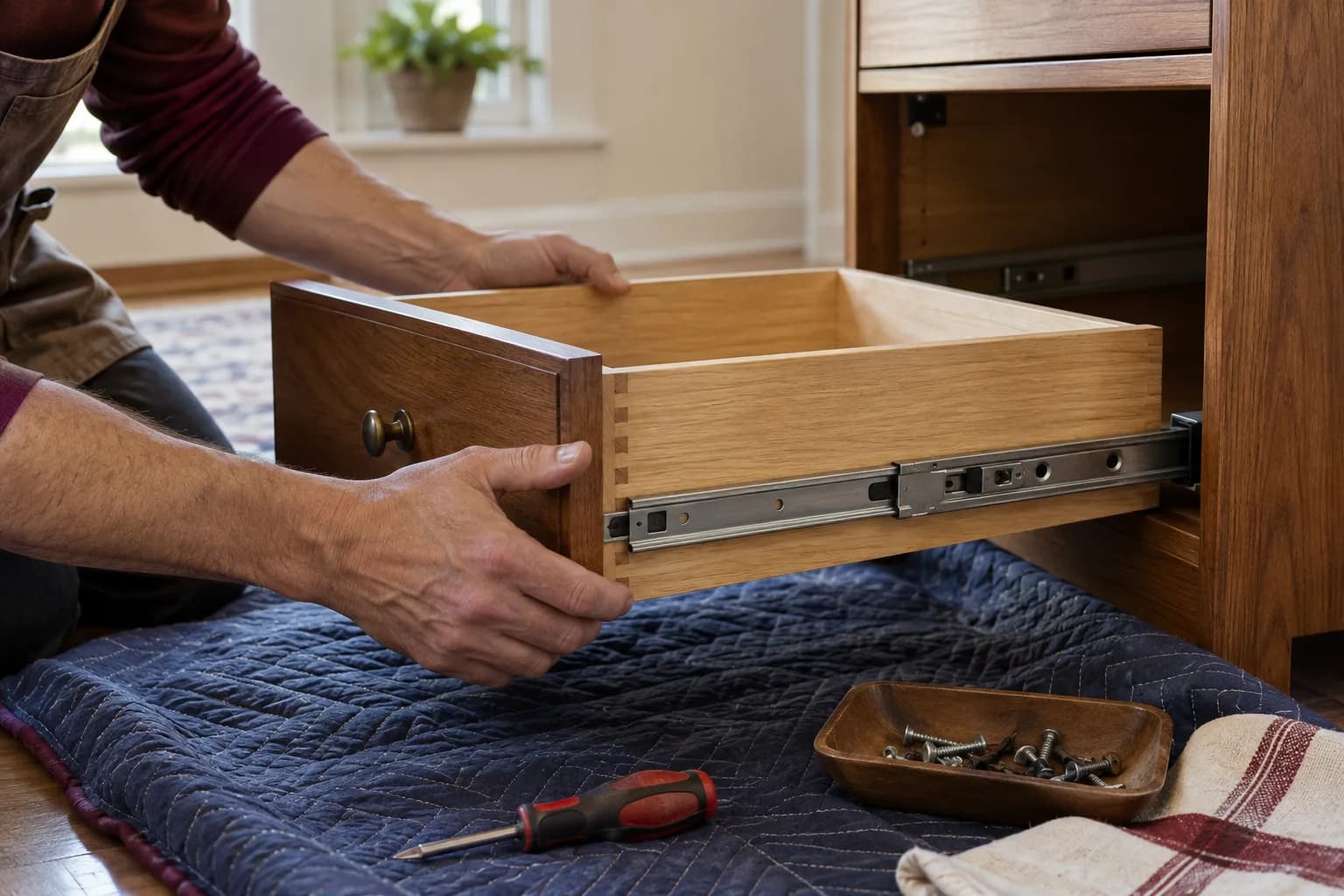
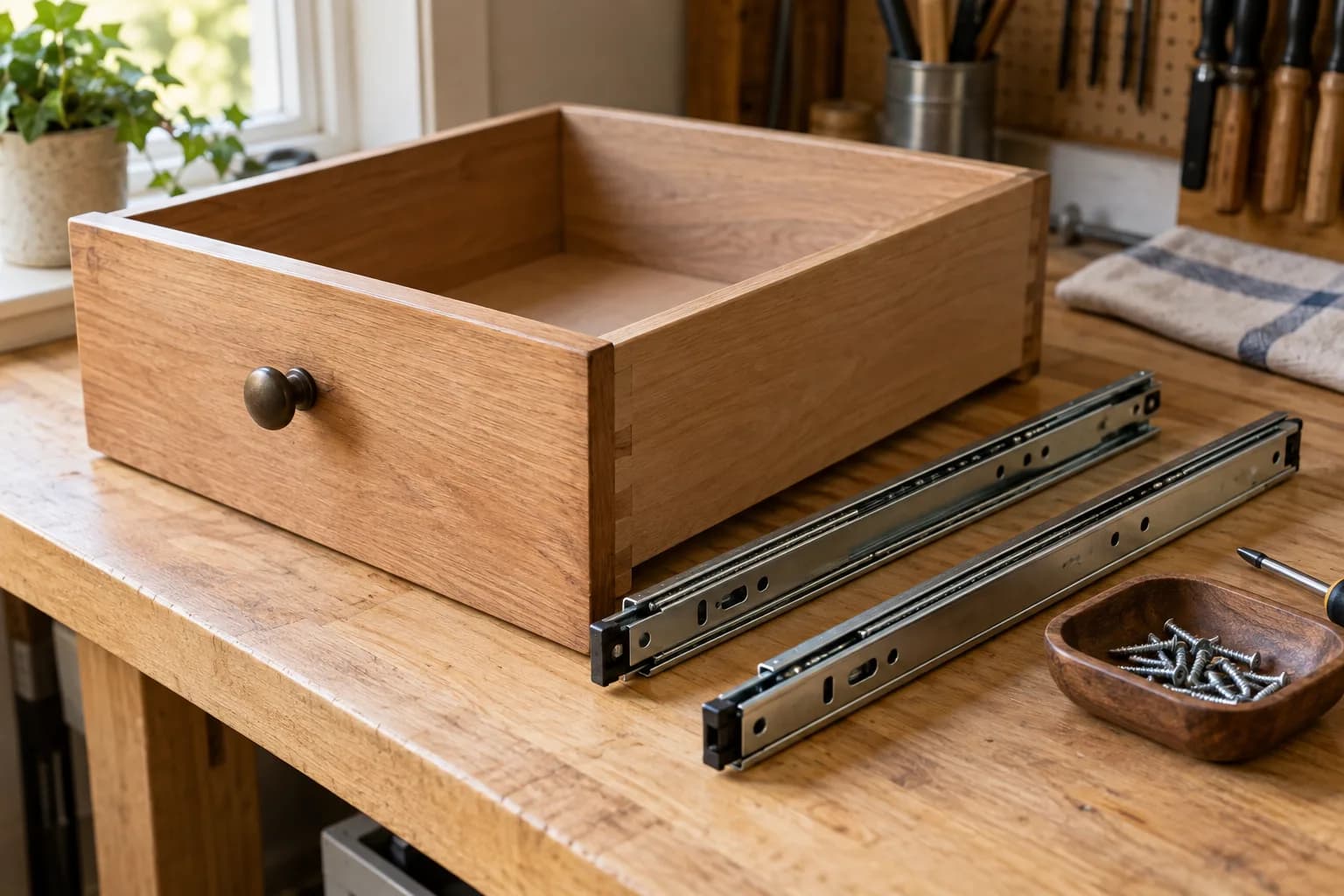
Visible side-mounted telescoping slides, small roller runners, concealed undermount runners and wood-on-wood drawers use different arrangements. The release may be a lever, clip, latch or a prescribed lifting movement. Some drawers include stops intended to prevent accidental removal.
Accuride's disconnect guide describes multiple disconnect types. That variety is the reason to identify the hardware first. A removal method from a video of a similar-looking drawer may not apply to yours.
Look for a brand mark or number on accessible hardware and consult the furniture manual. For concealed runners, Blum's instruction library provides model-specific assembly information. Do not treat colored clips or adjustment wheels as interchangeable across systems.
If removal requires supporting a drawer too large or heavy to manage safely, leave it in place and arrange appropriate help. Emptying a drawer does not necessarily make its construction light enough for one person to handle.
Inspect the drawer box as carefully as the slides
Once the drawer is safely removed according to its instructions, set it on a supported surface. Examine the bottom, corner joints and attachment points. Look for separation, sagging, cracks, loose connectors or material that has crumbled around a screw.
Check where the slide or locking device meets the drawer. A runner may be sound while the material holding it is damaged. Installing a stronger slide into a failing attachment point does not solve that problem. The repair needs to address the furniture itself.
Look inside the cabinet for a loose rear support, a screw head protruding into the travel path, or debris. Do not bend a runner straight by eye or drive a longer screw through an unknown panel. Cabinet sides may be thin, and their opposite face may be visible or close to another object.
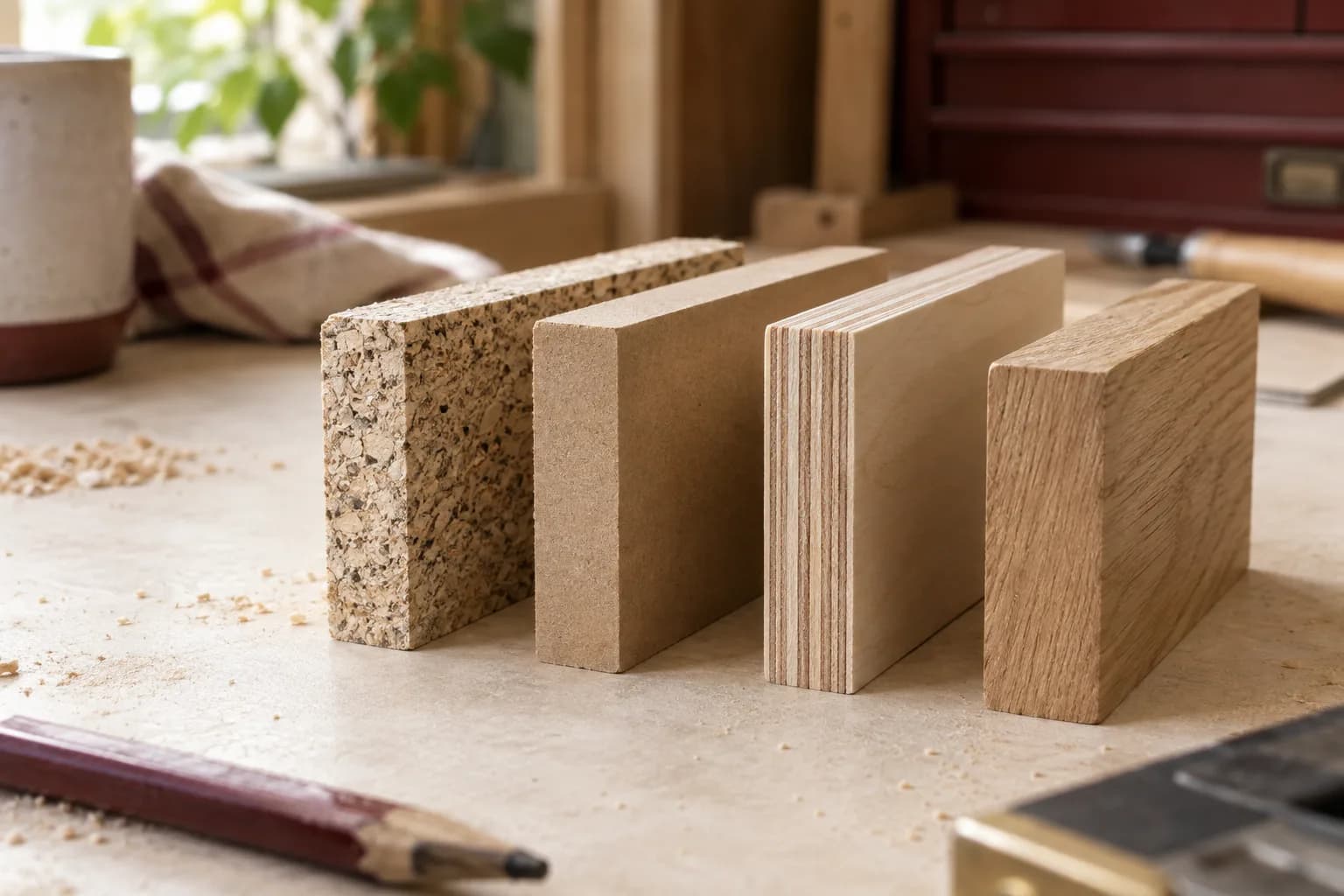
Our furniture materials guide can help you identify why a damaged screw hole in particleboard needs a different assessment from intact solid wood.
Clean only as the hardware maker permits
A dry, accessible dust or crumb buildup is different from contamination inside a bearing assembly. Start with the manufacturer's care instructions. Protect nearby finishes and avoid spraying an unidentified lubricant across the entire drawer mechanism.
Accuride publishes a cleaning and lubrication procedure for standard ball-bearing slides and explicitly distinguishes specialty appliance slides. Its procedure should not be generalized to every concealed runner, plastic roller or soft-close mechanism.
If the hardware brand or product family remains unknown, photograph it and seek identification before applying cleaners or grease. A maintenance product that changes the appearance of the cabinet finish creates a second repair. Test only where the product instructions allow, and never combine cleaning products to improvise a stronger treatment.
Adjust one documented setting at a time
Some systems provide front-height, side or depth adjustment; others depend on how the runners were mounted. Determine which adjustments the specific mechanism supports. Photograph the starting position, make a small permitted adjustment, then check the drawer's travel and its gap to surrounding fronts.
Avoid chasing a crooked gap while ignoring a loose cabinet. If the furniture itself rocks or its case has shifted, the drawer openings may no longer be consistent. Resolve that condition first. A cosmetic front adjustment cannot necessarily correct a distorted opening.
For an adjustment to count as successful, the drawer should travel smoothly through its intended range, remain properly retained and close without contact. A front that looks straight while the mechanism binds is unfinished work.
Match replacements by more than length
Prepare a parts record before ordering:
- Manufacturer and exact hardware identification, if available.
- Drawer dimensions and cabinet opening measurements.
- Mounting style and required clearances.
- Extension, closing and release functions.
- Furniture loading guidance and replacement compatibility.
- Condition of the material at every attachment point.
Follow the product's measurement convention; the visible extended length is not automatically its ordering length. Check whether the replacement is sold as a pair and whether rear brackets, locking devices or other components are separate. A near match may require rebuilding the drawer, which changes the scope substantially.
Keep the old hardware until the replacement has been identified and the fit confirmed. Do not mix unrelated left and right components simply because their holes appear close.
Check the result under normal use
After correct reassembly, verify empty operation first, then return an appropriate everyday load within the furniture's instructions. Check that contents do not protrude into the closing path. Watch the drawer's alignment again after several normal cycles; renewed rubbing can reveal an unresolved attachment problem.
Use our repair-or-replace guide if damaged panels or unavailable components make the decision less straightforward. For an assembly or hardware assessment, see furniture assembly and request an estimate with the drawer model, photos and the point where it catches. Confirm the repair scope before buying parts.