Quick answer
Before setting up a rental, separate the choices you control from changes that need clarification with the property owner or manager. For each proposed task, record the item, exact location, surface, installation method, and removal plan. Obtain a clear answer where permission is uncertain before buying hardware or scheduling work that changes the property.
“Renter-friendly” is a planning description, not proof that a product is allowed or cannot damage a finish. This guide helps you organize a setup conversation; it does not interpret your lease or decide legal responsibility. Use the actual property instructions and ask the responsible person about anything unclear.
Make a room plan before a shopping list
Start with how the room needs to function. Place the bed, desk, seating, and storage on a simple plan, including doors, windows, and everyday walking routes. Check measurements before choosing furniture or committing to a wall location.
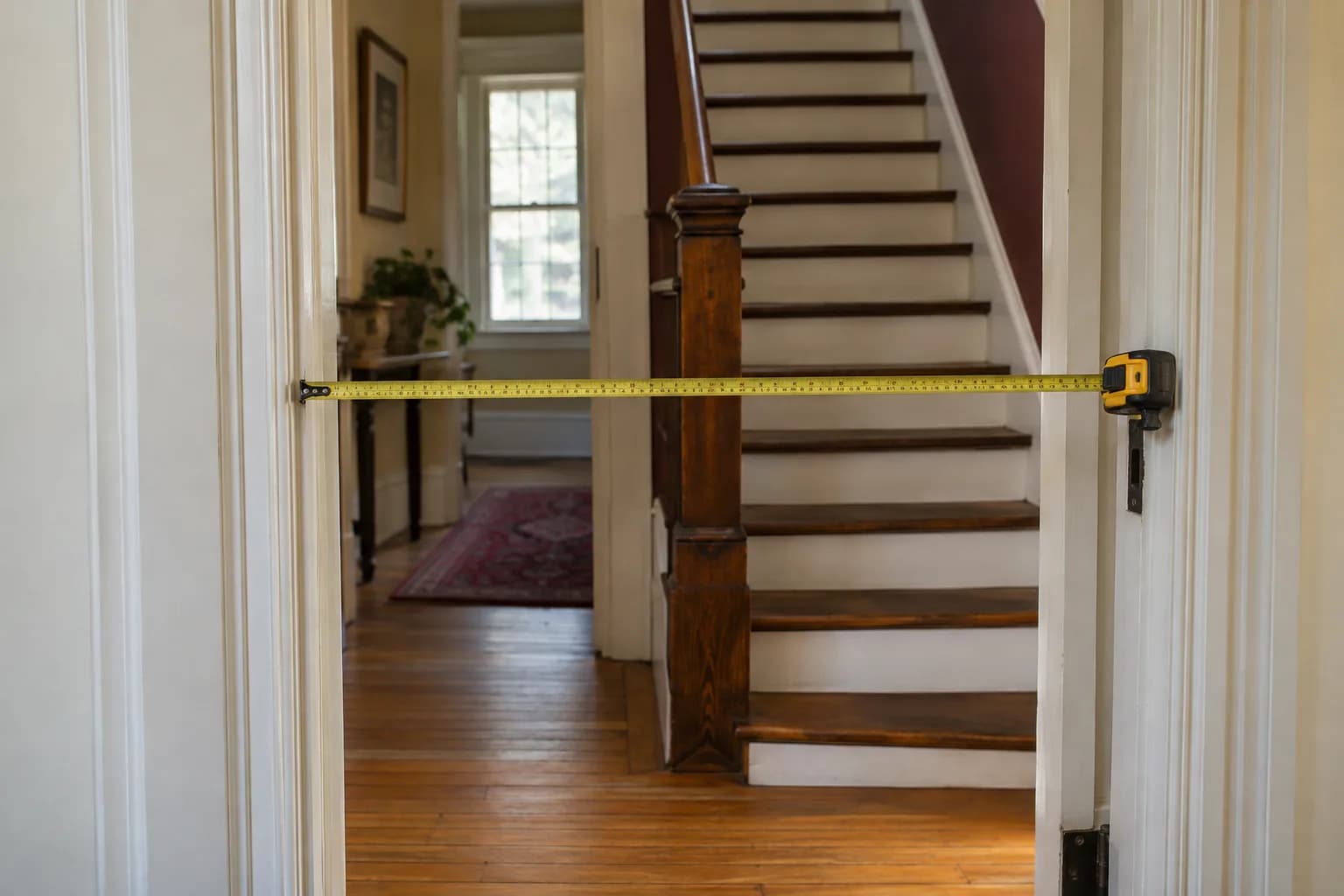
Our door, stair, and elevator measurement guide covers access planning. Here, the next question is what the item requires after it reaches the room. A tall storage unit may require anchoring. A display arrangement may need a mount. A desk setup may need a supported cable path that does not depend on altering walls.
Label unresolved requirements before buying. “Needs anchoring permission” belongs beside the furniture choice, not at the end of assembly day. The furniture's instructions and the property's requirements both need an answer; calling an item freestanding does not automatically settle its installation needs.
Ask a question that can receive a specific answer
A vague request to “decorate the apartment” leaves too much open. Describe the exact change: the item, location, proposed method, and who would perform the work. Include a product link and a clear room photo if useful, excluding personal information.
For example: “I would like to install this shelf on the living-room wall beside the desk. The product instructions require wall fasteners. Can you confirm whether this location and installation are permitted, and whether you have surface or restoration requirements?” That is a planning example, not a legal form.
Keep the response with your setup notes and share the relevant limits with the person doing the work. If the answer changes the method or location, update the request before the visit. Silence, a prior tenant's holes, or a neighbor's similar setup is not a useful substitute for a clear answer to your own plan.
Record the surface you actually have
Take overview and close-up photographs before placing an accessory on a wall or cabinet. Note existing chips, peeling paint, repairs, wallpaper, texture, and other visible conditions. Do not guess the material behind the finish from one photo.
A surface may look smooth from across the room but have a fragile coating or an old repair underneath. Where the installation depends on the substrate, ask for an appropriate assessment. Our wall-material guide explains why the wall changes mounting decisions.
Avoid making exploratory holes or peeling off existing material to satisfy curiosity. The preparation task is to identify known conditions and unresolved questions. If the proposed method needs information you do not have, pause that installation until it can be assessed within the approved scope.
Read removable-product instructions literally
Removable adhesive products still have surface, load, placement, application, and removal requirements. Read the instructions for the exact product and size. Do not transfer a rule from one hook or strip to every adhesive accessory sold under the same brand.
For example, Command's picture-hanging-strip directions include restrictions involving wallpaper, placement over beds, and valuable or irreplaceable objects, as well as a waiting period after painting. They warn that failure to follow directions can cause damage. That is why a “no-drill” label does not remove the need to review both the product and the surface.
Plan removal before installation. Will the release tab remain accessible? Can you follow the specified removal motion without an obstacle? Will you still have the instructions when the room is rearranged? A product that can theoretically be removed is less useful if the installation hides the part needed to remove it properly.
Keep tip-over protection in the decision
Do not solve a permission question by omitting a required anti-tip step. CPSC's Anchor It guidance emphasizes securing furniture and TVs according to manufacturer instructions. Decorative adhesive strips should not be assumed to substitute for the manufacturer's anti-tip hardware.
If a chosen item requires anchoring and the approved method is unresolved, address that before placing it into use. Discuss the requirement with the property manager and, if necessary, reconsider the item or layout. A different furniture choice still needs its own instructions checked; size or appearance alone does not establish stability.
Our furniture and TV anchoring guide covers the underlying planning questions. The rental-specific task is coordinating permission and the correct installation together, rather than letting one disappear because the other is inconvenient.
Keep original parts and a restoration record
If an approved change involves replacing removable hardware, identify where the original parts will be kept. Label the bag by room and location, and store it with the relevant instructions. Photograph the original arrangement so reinstallation is not based on memory.
Do not remove property-owned fixtures or make electrical, plumbing, or structural alterations as an improvised extension of a setup visit. If your idea crosses into that work, raise it with the property manager and an appropriately qualified provider. A convenient appointment for furniture assembly does not authorize unrelated building changes.
Record the accepted end condition. If restoration is expected later, clarify the process rather than assuming any patch or paint will be acceptable. Keep your notes factual: what was approved, what was installed, and what remains stored. Questions about obligations belong with the responsible property contact or an appropriate adviser.
Example: making a small rental office usable
Imagine a renter planning a desk, monitor, printer, and wall art in a spare room. The first layout uses a tall cabinet and a mounted shelf, but both introduce wall requirements. The renter sends the product details and locations to the manager before ordering.
While waiting for the response, the renter can measure the desk area, choose a supported desktop monitor arrangement, and plan where existing power and network connections will serve the equipment. These independent choices can move forward without assuming permission for the wall changes.
After the response, the renter revises the shopping list and installation scope. Any furniture anchoring remains tied to the manufacturer's instructions and the approved method. The eventual visit has clear tasks and fewer improvised decisions because the unresolved property questions were separated early.
Bring one checklist to the setup visit
For every proposed installation, confirm:
- The correct product and instructions are available.
- The intended room and exact position are agreed.
- Necessary permission and property-specific conditions are clear.
- Visible surface condition has been recorded.
- The installation method suits both product and surface.
- Required safety steps, including anchoring, are resolved.
- Original parts and removal instructions have a storage location.
- Anyone approving a change during the visit is identified.
Check completed work against that list. If the surface differs from expectations, stop the affected task and clarify the next step. A preapproved location does not guarantee that every fastener or product will be suitable once inspected.
For assembly, mounting, cleaning, or device setup, request an estimate with the relevant product details and permission limits. Taskburgh can discuss the listed setup tasks; transportation, heavy lifting, and specialist building work should be arranged separately with appropriate providers.