Quick answer
Before you unpack a single box, do a quick safety pass: test the smoke and carbon monoxide alarms, and find your water shutoff, breaker panel, and gas shutoff (if you have gas). Everything else — furniture placement, decorating, organizing closets — can wait a day. Knowing where the water shuts off before you have a leak, and knowing your alarms actually work before your first night, is the one part of moving in that's genuinely time-sensitive.
Key takeaways
- Test every smoke alarm and CO alarm on day one, don't assume they work
- Find your main water shutoff, electrical panel, and gas shutoff before you need them
- Deep clean before you fill the space with your belongings, not after
- Change the locks or rekey if you don't know who else has a key
- Furniture placement is easier to get right the first time than to redo later
Day one: the safety walkthrough
It doesn't take long, and it's worth doing before anything else.
Smoke and carbon monoxide alarms
Don't assume the alarms already installed are working, are in the right places, or cover every area they should. Two federal agencies publish simple guidance worth checking your new home against:
- Carbon monoxide alarms. The U.S. Consumer Product Safety Commission says every home should have a CO alarm on each level and in the hallway near the bedrooms in each separate sleeping area. It recommends battery-operated or plug-in alarms with battery backup, installed according to the manufacturer's instructions, tested every month, with batteries replaced every year.
- Smoke alarms. The U.S. Fire Administration recommends smoke alarms inside and outside each bedroom and sleeping area and on every level of the home, tested monthly. It advises replacing batteries at least once a year (including the backup battery in hardwired alarms) and replacing the entire smoke alarm 10 years from its manufacture date.
On move-in day:
- Locate every smoke alarm and CO alarm in the home
- Test each one using its test button
- Check whether alarms are battery-only, plug-in, or hardwired with battery backup
- Look for the manufacture date marked on each smoke alarm (it may only be visible once the alarm is off its mounting base) and plan to replace any that are 10 or more years old
- If an alarm has replaceable batteries and you don't know how old they are, put in fresh ones
- Compare coverage with the guidance above — every level, and in or near sleeping areas — and fill any obvious gaps
- Follow each alarm's manufacturer instructions for where and how to mount it
Find your shutoffs before you need them
Locate these before your first load of boxes comes in, and make sure everyone in the household knows where they are:
- Main water shutoff valve (often in a basement, utility closet, or near the water meter)
- Electrical breaker panel, and check whether breakers are labeled (label them yourself if not)
- Gas shutoff valve, if the home has gas service
- Water heater location and its own shutoff, if separate
Finding these on a calm afternoon takes five minutes. Finding them for the first time during a leak or a tripped breaker is a much worse way to learn your new house.
Before you unpack: clean the empty space
An empty room is dramatically easier to clean than a full one — you can reach every baseboard, corner, and closet shelf without moving furniture out of the way. Wipe down cabinets and drawers before putting anything in them (you don't know how long the space has been closed up), vacuum or mop floors corner to corner, and clean inside the refrigerator and oven if they're staying with the home. Whatever you don't get to now becomes much more work once boxes and furniture are in the way.
First week: the administrative stuff
- Update your address with the post office, bank, and any subscriptions
- Confirm utilities (electric, gas, water, internet) are active in your name
- Change the locks or rekey if you're not certain who else has a key (a landlord, a previous owner, a contractor)
- Check that renter's or homeowner's insurance is in place before, not after, something goes wrong
- Locate the water main and gas shutoff for anyone who'll be watching pets or the house while you're out
Placing the heavy stuff: get it right the first time
Furniture, TVs, and shelving are far easier to place correctly the first time than to relocate later, especially anything mounted or heavy enough to need two people. Before you commit to a layout:
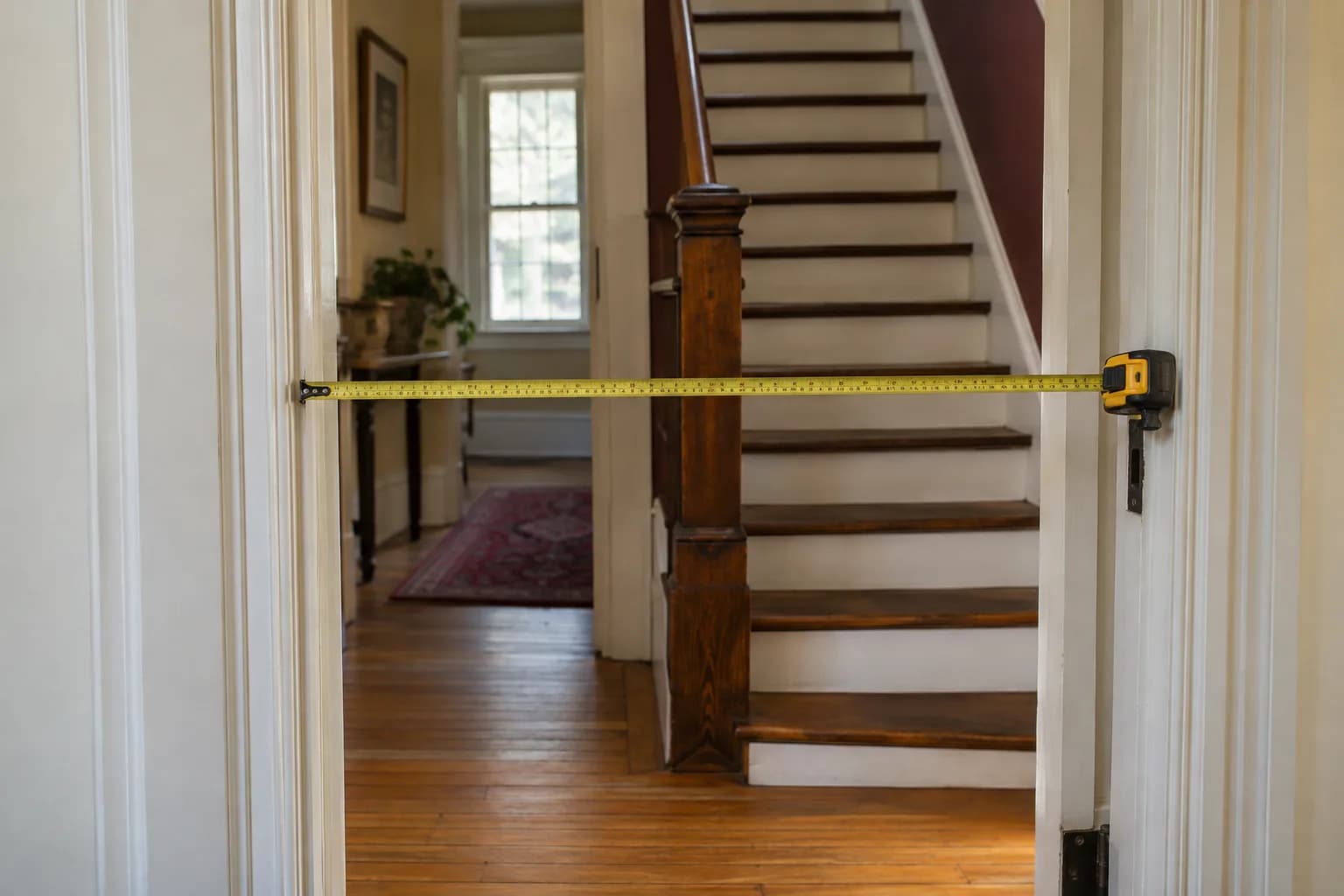
- Walk the empty room and picture the path from the door to the far corner — that's your delivery and arrangement path
- Decide TV and wall-mounted item placement before drilling anything, since patching and repainting a moved mount is extra work
- If you have kids or pets, plan dresser, bookshelf, and TV placement with anchoring in mind from the start rather than as an afterthought — securing furniture and TVs against tipping is worth its own dedicated pass once things are in place
Create one functional room before starting every room
A new home can contain unpacked boxes for a while and still work well. Choose a small first-night set: a usable sleeping space, bathroom essentials, drinking water, chargers, and enough light to move around safely. Keep walkways and exits clear. Put the documents, medication, keys, and items you need tomorrow somewhere deliberate rather than inside a box labeled “miscellaneous.”
Then establish one work surface. It might be a kitchen table temporarily, but it should have a chair, suitable power access, and room for the tasks you must complete this week. This is especially valuable if you are working remotely during the move. A fully decorated living room will not help much if the only laptop charger is buried in storage.
Sequence connected tasks so you do not repeat them
The order matters when several small jobs share the same area. Clean the accessible wall and floor before furniture assembly. Decide on a desk location before installing cable management. Confirm the television's position and the soundbar arrangement before placing decorative shelving around it. Plan storage before asking someone to anchor a tall cabinet permanently.
Consider a home office with a new desk, printer, and mesh node. First confirm where the computer will be used and test the connection there. Then assemble the desk, set up the monitor and peripherals, and make sure the printer works. Cable cleanup comes after the devices have passed a practical test. Tidying every cable first often means undoing the neat work when the final layout changes.
Write these dependencies next to your list instead of treating every task as equally urgent. A sensible order is usually more useful than trying to book everything for the same afternoon.
Keep a small home setup record
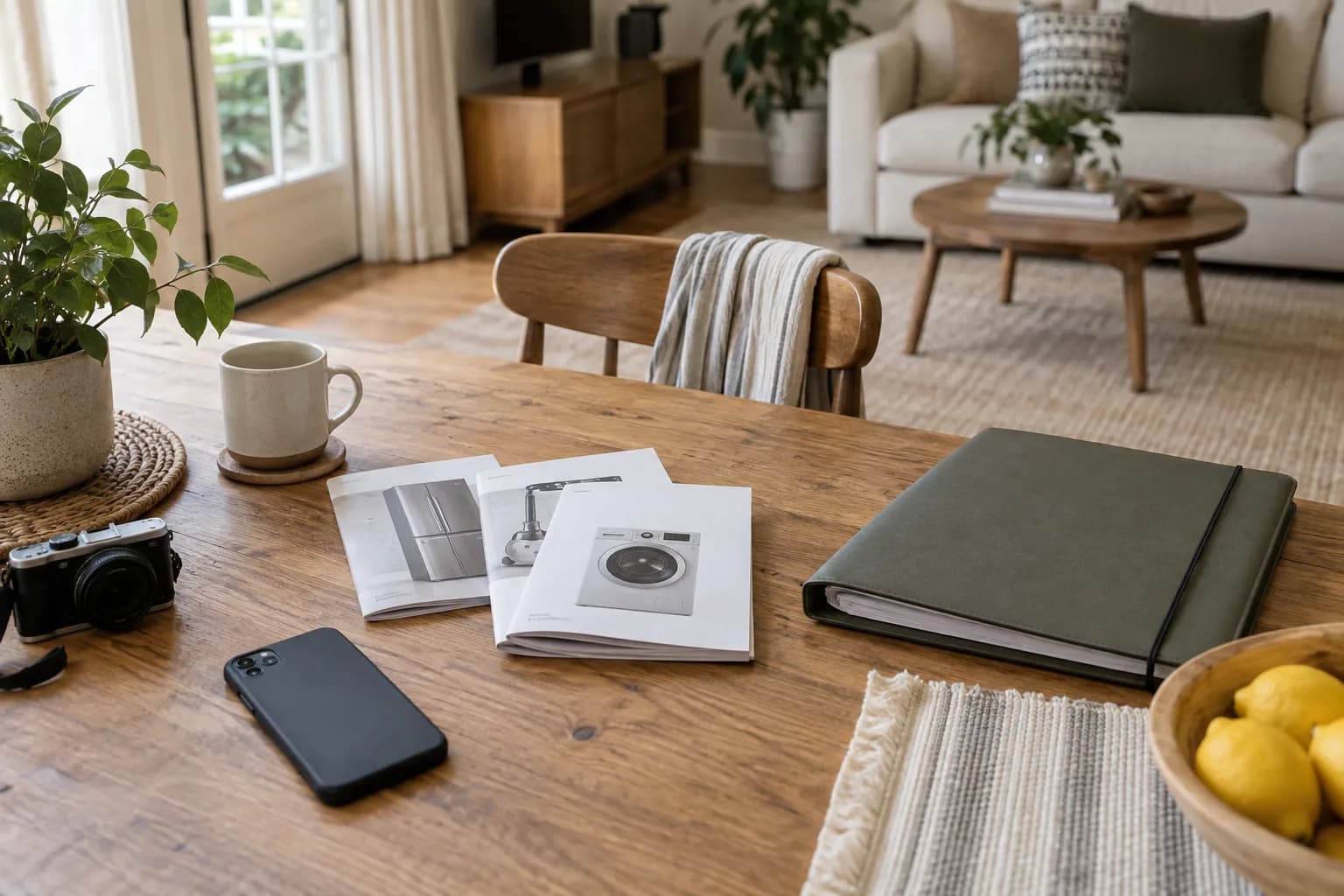
Start a folder for appliance model numbers, furniture assembly instructions, paint labels, network information, and service records. Store account passwords separately in a password manager. A photo of the label on a monitor stand or the hardware bag from a bookcase can save a long search when you need a replacement part later.
For rental homes, record approved changes before making them. Mounting holes, locks, wall finishes, and permanent cable routes may need the owner's agreement. Share that approval with the person doing the work rather than expecting a technician to interpret the lease on site.
Review the remaining list after living in the home for a few days. You may discover that a lamp belongs elsewhere or that the best desk location is quieter than the original choice. Keep early decisions reversible where practical. Taskburgh can help with agreed cleaning, furniture assembly, device setup, and mounting tasks; transportation of belongings and heavy lifting should be arranged separately with an appropriate provider.
FAQ
Do I need to test alarms if the home was just inspected or the previous owner said they work? Yes — test them yourself on move-in day regardless of what you're told. It takes a minute per alarm and it's the one thing on this list with real consequences if skipped.
How do I know if my breaker panel is labeled correctly? With the panel door open (never remove the panel cover itself), switch off one breaker at a time and check which outlets or fixtures lose power, then relabel as you go. Unplug computers and other sensitive electronics first, and remember the refrigerator may be on one of those circuits. It's tedious but only needs doing once, and it matters the first time you need to isolate a specific circuit.
Should I clean before or after I move furniture in? Before, whenever possible. An empty room lets you clean every surface without working around furniture, and you won't be moving things twice.
What's the single most time-sensitive thing on this list? Testing the smoke and CO alarms. Most of the rest can reasonably wait a day or two; working alarms are worth confirming before your first night in the house.
Get settled faster
If you'd rather have the move-in clean, the TV mounting, or the furniture assembly handled by someone else while you focus on the move itself, request an estimate with a few photos of the space. Browse our service catalog for those setup tasks. Arrange transportation and heavy lifting separately; Taskburgh does not offer moving services.