Quick answer
A touch-up works well for small, recent damage on a wall that hasn't visibly faded or changed sheen — think a scuff from moving a couch, or a nail hole from a picture you took down last month. Once a wall has aged, faded, or been cleaned repeatedly, or the damage covers a large or oddly shaped area, a touch-up usually ends up more visible than the flaw it was meant to hide, and repainting the full wall (or at least corner-to-corner) is the better call.
Key takeaways
- Fresh, small, isolated damage on a wall that hasn't faded: touch-up is usually fine
- Aged walls, sheen mismatches, or damage near light sources: repaint the full wall
- In homes built before 1978, sanding or scraping old paint — even for a patch — calls for extra care with dust
- Keeping leftover paint labeled with the product name, color, and sheen saves you guesswork later
Why touch-ups sometimes look worse than the damage
This isn't bad luck — there are a few predictable reasons a touch-up patch stands out instead of blending in:
- The wall has aged, and the paint in the can hasn't. A painted wall can change subtly over months and years with sunlight, everyday dirt, and repeated cleaning, even if you don't notice it day to day. Leftover paint from the same can, applied fresh, can look slightly different from the wall around it — a mismatch you only notice once it's dry.
- Sheen builds up differently in a small patch. Even the exact same paint can look different depending on how it's applied — a small dabbed or brushed touch-up often has a different texture and light reflection than the original rolled coat, which shows up as a slightly different sheen under raking light (light hitting the wall at a low angle, like from a lamp or a window).
- The patch is in the wrong spot for hiding anything. A touch-up near a light switch, under a wall sconce, or beside a window catches light differently than the middle of a flat wall, making even a perfect color match visible as a slightly different texture or gloss.
When a touch-up genuinely works
- The damage is small, recent, and isolated (a scuff, a nail hole, a scrape)
- You have leftover paint from the original job, correctly labeled
- The wall hasn't been repeatedly cleaned or exposed to a lot of direct sun since it was painted
- The spot isn't right next to a light source or window that will catch it at an angle
- You're using the same application method as the original coat (roller vs. brush matters)
When to repaint the whole wall instead
- The paint can is old, was never labeled, or you're not sure it's the exact original batch
- The damage is spread across a larger or irregular area
- The wall shows visible fading, yellowing, or sheen differences already, even before you touch it
- The room has a lot of natural light or the wall catches raking light from a lamp or window
- You've tried a touch-up before in this exact spot and it stood out
When in doubt, repainting corner-to-corner (a full wall, stopping at the inside corners) is a safer bet than a small patch — it avoids a visible patch edge in the middle of the wall, and on a small or medium wall the extra effort is often modest compared with redoing a patch that didn't blend.
Older homes: a note on old paint layers
Many older Pittsburgh houses have plaster walls carrying decades of paint layers. A touch-up that only needs a little filler and fresh paint over a sound surface is one thing; a repair that means sanding or scraping through those old layers is another. The EPA's Lead Renovation, Repair and Painting program covers homes built before 1978 because renovation, repair, and painting activities can create hazardous lead dust when surfaces with lead paint, even from many decades ago, are disturbed.
So if your home is pre-1978, don't assume a small area is too small to matter. Before sanding or scraping old paint — for a patch or a full repaint — find out how the dust and debris will be contained and cleaned up, and if you hire someone, ask whether they are EPA lead-safe certified. The EPA's lead program pages also include guidance for do-it-yourselfers.
Set yourself up for easier touch-ups later
- After any paint job, keep a labeled sample: product name, exact color name and code, sheen, and the room it's in
- Store leftover paint in a cool, dry place, sealed tightly, and note the date on the can
- If you repaint a room years later, don't assume the old leftover can still matches — check it against the wall before using it
- For high-traffic areas (hallways, stairwells, kids' rooms), consider a more washable finish from the start, and check the paint label for its cleaning guidance
Diagnose what you are seeing before opening the paint
A mark can be dirt on the surface, a scratch through the coating, a dent in the wall, or a difference in sheen. Each needs a different response. Start with the coating manufacturer's cleaning guidance and a gentle test in an inconspicuous area. If the finish changes when cleaned, stop rather than making the polished or dull patch larger.
Look at the area straight on and from an angle under normal room lighting. If the color seems to match but the patch flashes as you move, texture or sheen may be the main issue. If there is a raised edge, filling and surface preparation may matter more than another coat of paint. A leaking or damp area needs its cause resolved before cosmetic work.
Photograph the patch for discussion, but do not rely on a phone image to judge the exact match. Camera adjustments can hide a sheen difference or exaggerate a color shift. An in-room sample provides more useful evidence than comparing two screens.
Run one small test with a clear stopping point
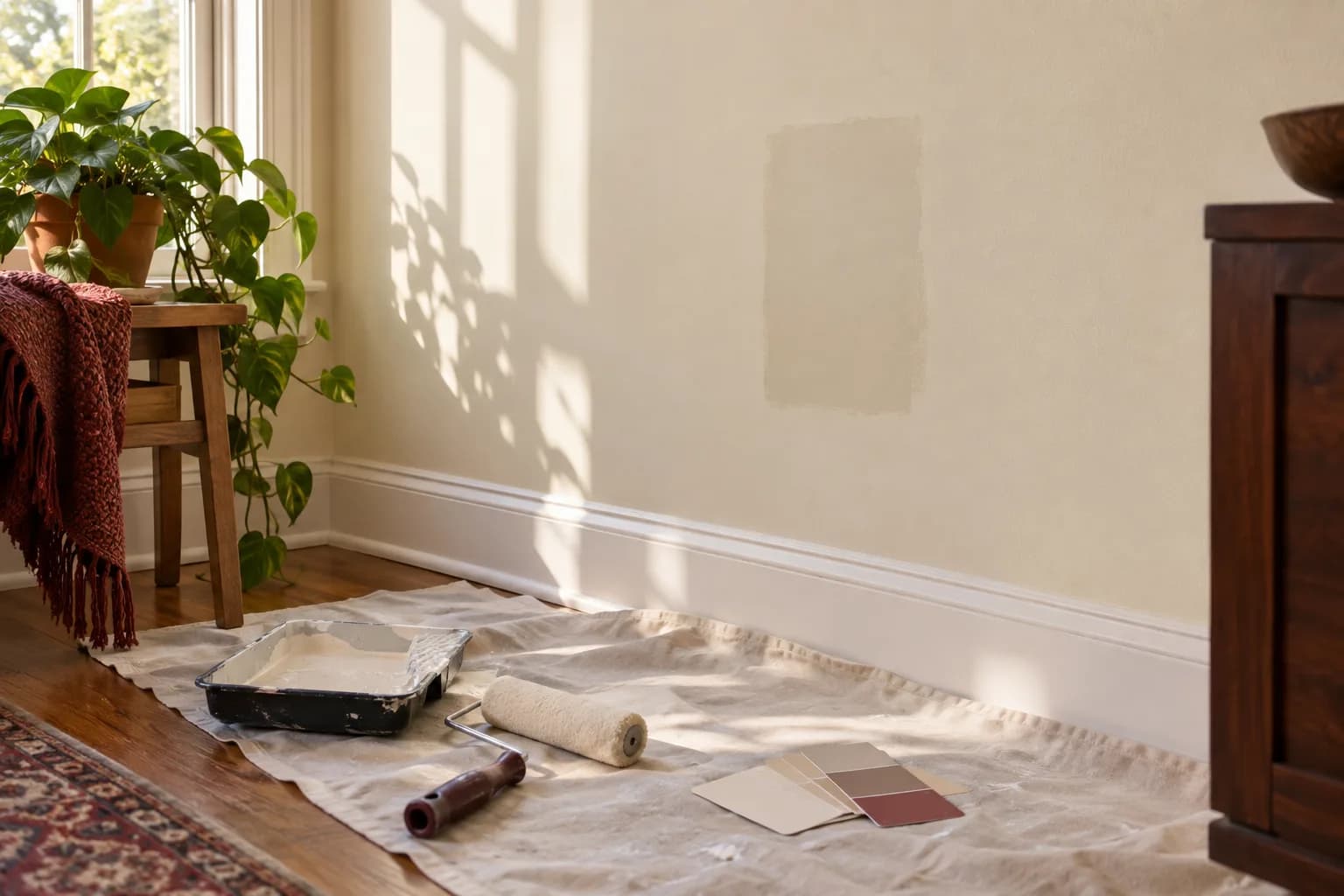
Confirm the leftover paint is the correct product and that it is usable according to the manufacturer. The color name alone does not establish matching sheen, base, or formulation. Stir as directed and use a compatible tool. Test a modest area where a later full-wall repaint would still be manageable.
Allow the test to dry according to the product instructions before deciding. If it remains conspicuous, do not keep expanding the patch in hopes that the edge will disappear. That can create a larger area to prepare. Decide whether the visible result is acceptable for the room's use or whether painting to a natural boundary makes more sense.
A closet wall hidden by clothing and a sunlit living-room wall can reasonably have different finish expectations. Agree on the standard before the work: a tidy cosmetic improvement, a close match, or a uniform wall. A repair estimate should not promise an invisible result when the old finish and lighting make that uncertain.
Plan the whole-wall option carefully
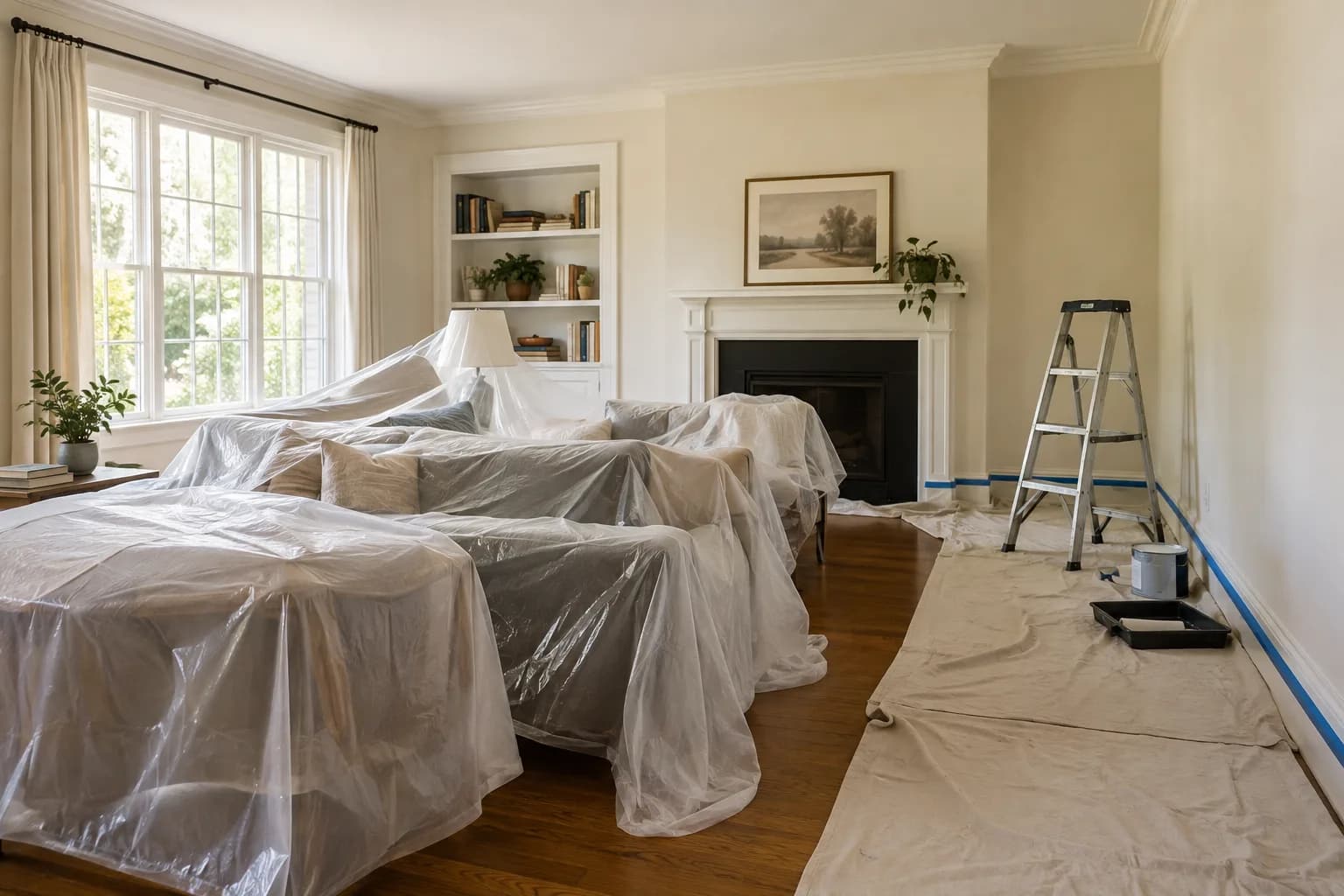
Identify the actual boundaries: inside corners, trim, ceiling line, and openings. A large open-plan wall may extend farther than it appears in a close photograph. Include furniture protection and any needed patch preparation in the scope, then check whether adjacent surfaces will look noticeably different after one wall is renewed.
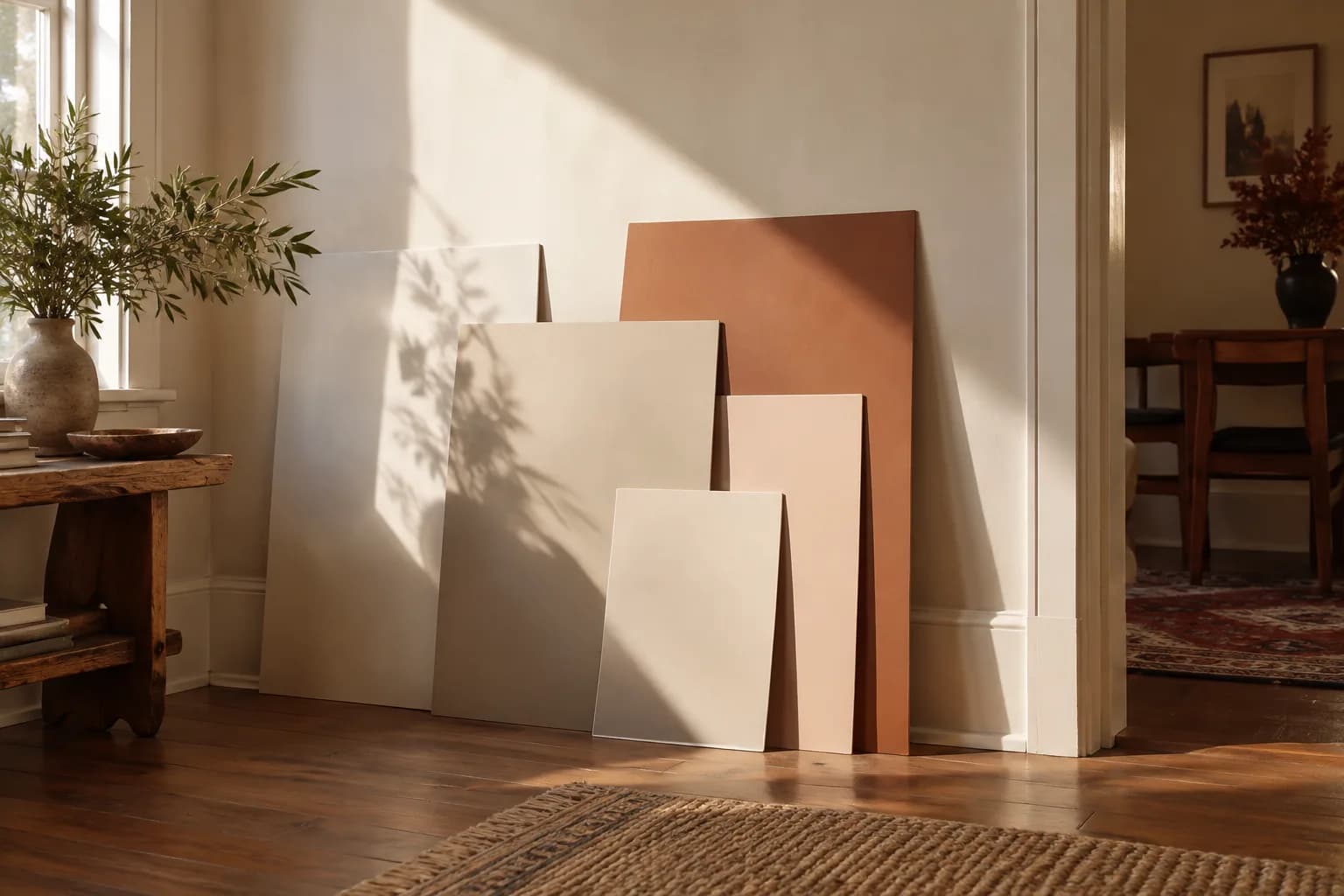
Keep the final paint record for the exact surface, including product, sheen, code, and date. Save a labeled sample or can only if it can be stored properly. Good records improve the next decision, but they do not guarantee a future touch-up will disappear as the existing coating ages. If you are also changing the color, our room-light guide explains how to evaluate samples before committing.
FAQ
Can I just buy a small sample pot to match my wall color exactly? You can get a sample mixed to match a color code if you know it, but matching the exact aged shade of a wall that's been up for a few years is difficult even for a professional, since the original paint has changed slightly with time and light exposure. A full-wall repaint sidesteps the matching problem entirely.
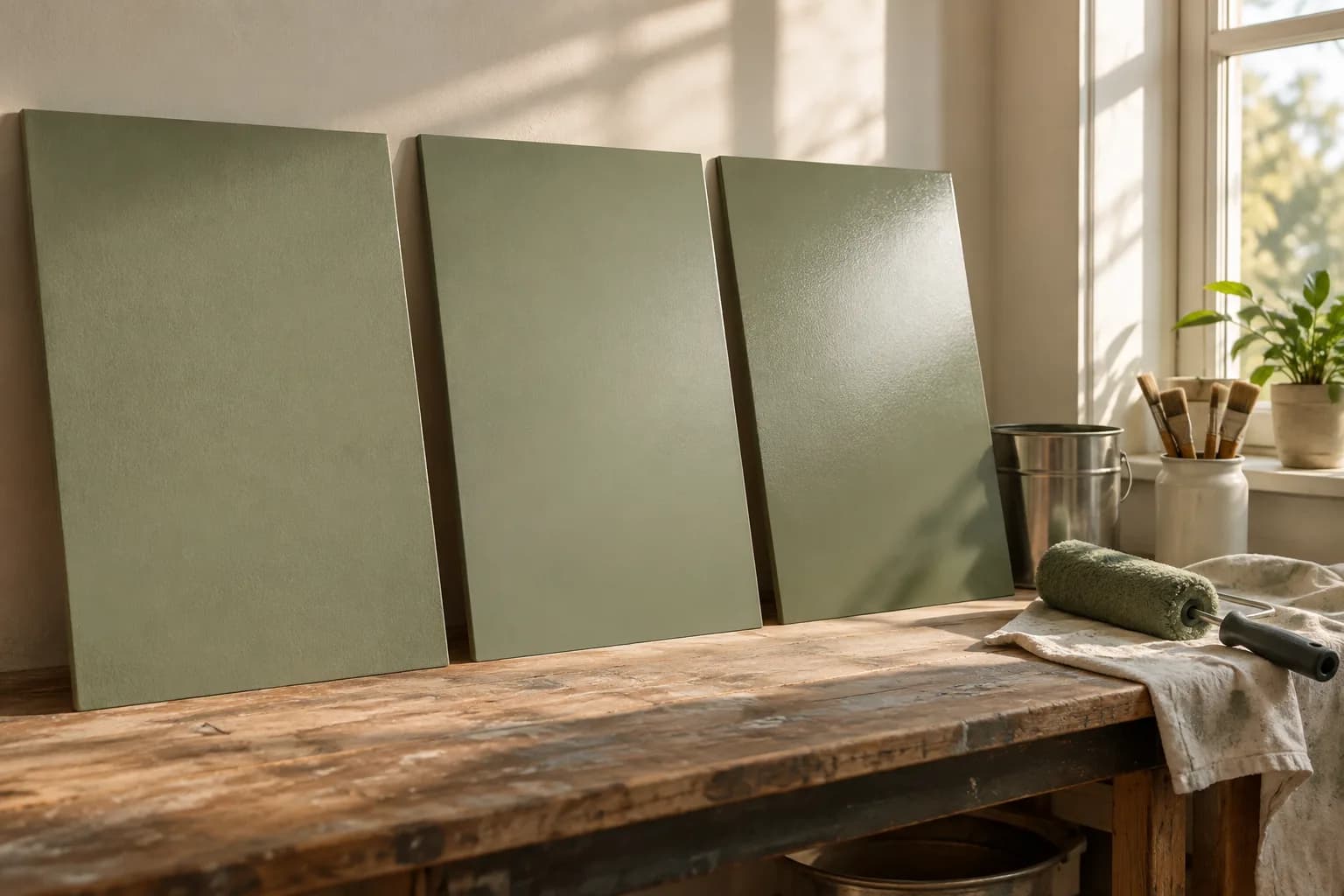
Does the type of paint sheen matter for how visible a touch-up is? Yes. Flatter finishes (flat, matte) tend to be more forgiving of touch-ups because they reflect less light, while glossier finishes (satin, semi-gloss) tend to show differences in application more clearly. That's one reason kitchens, bathrooms, and trim, which are often painted in glossier finishes for easier cleaning, can be harder to touch up invisibly.
Is it cheaper to just always repaint the whole wall? Not necessarily in materials, but it often saves you from a second visible problem (a mismatched patch) and the time spent trying to fix it. For small, fresh damage, a touch-up is still the faster and cheaper option — the key is being honest about whether your situation fits that case.
What if I don't know what paint is currently on the wall? If you don't have the product name, color, and sheen recorded, a color-matching service can sample the existing paint, but this adds time and isn't always a perfect match. This is a good reason to start labeling paint cans and samples for every room going forward.
Not sure which way to go?
If you're staring at a scuffed wall and can't decide, include a photo when you request an estimate and we'll talk through whether a touch-up or a full-wall repaint makes more sense for that spot. You can also see how we approach the work on our painting services page.