Choose the product and sheen together
Matte, eggshell and satin describe a paint's reflective appearance, but the finish name alone does not tell you everything about cleaning, suitable surfaces or application. Compare specific products intended for your room, then evaluate their available sheens.
A useful starting point is matte for a quieter appearance, eggshell for a subtle glow, and satin for a more noticeable reflection. Treat those as options to sample, not rules that assign every room one mandatory finish. The best choice is the one that balances the way your wall looks with the way you actually use it.
What the three finishes change
Benjamin Moore's finish guide describes matte as nearly flat, eggshell as a low-sheen finish and satin as more reflective. It also identifies specific matte products intended for washing or humid rooms. That is a useful reminder that lower sheen does not automatically mean unsuitable for every demanding location.
In practical terms, decide how much reflected light you want to see when walking past the wall. A color you like on a small card may read differently across a large surface with a different finish. Sample the intended combination rather than treating sheen as a last-minute checkout choice.
Use the actual manufacturer's terminology when ordering. A similar-sounding finish from another product line should be compared on a sample instead of assumed identical. Keep the full product name beside the sheen and color code in your project notes.
Start with the wall's actual condition
Look at the wall with its normal lights on and with daylight coming across it. Note patches, uneven texture, old roller marks and areas that have been repaired. Photograph them for the project discussion, but inspect in person before setting finish expectations.
A low-reflection finish can make some surface irregularities less conspicuous; it does not flatten them or stabilize a failing coating. Raised patch edges, loose paint and unresolved dampness still need assessment. Choosing matte to avoid all preparation is likely to produce an unsatisfying result.
Sherwin-Williams' preparation guidance emphasizes a clean, sound, dry surface and recommends a small compatibility test before painting the entire space. Let the existing surface and selected coating determine preparation rather than assuming a change of sheen can conceal every issue.
Write down how the room gets dirty
"High traffic" is more useful when translated into actual contact. A hallway may collect backpack scuffs, a dining wall may receive chair contact, and a bedroom may rarely need wiping except near a switch. Describe those situations when comparing paints.
Ask the retailer or painter which specific products suit the expected cleaning and surface. Read their cleaning instructions, including when a fresh coating can first be cleaned. Avoid making a buying decision from the simple claim that satin is washable or matte is not.
If furniture repeatedly strikes the wall, address the layout too. Paint selection cannot eliminate physical contact from a chair back or a door handle. A slightly different furniture position may matter more to the room's appearance than moving one step up the sheen range.
Use a side-by-side sample plan
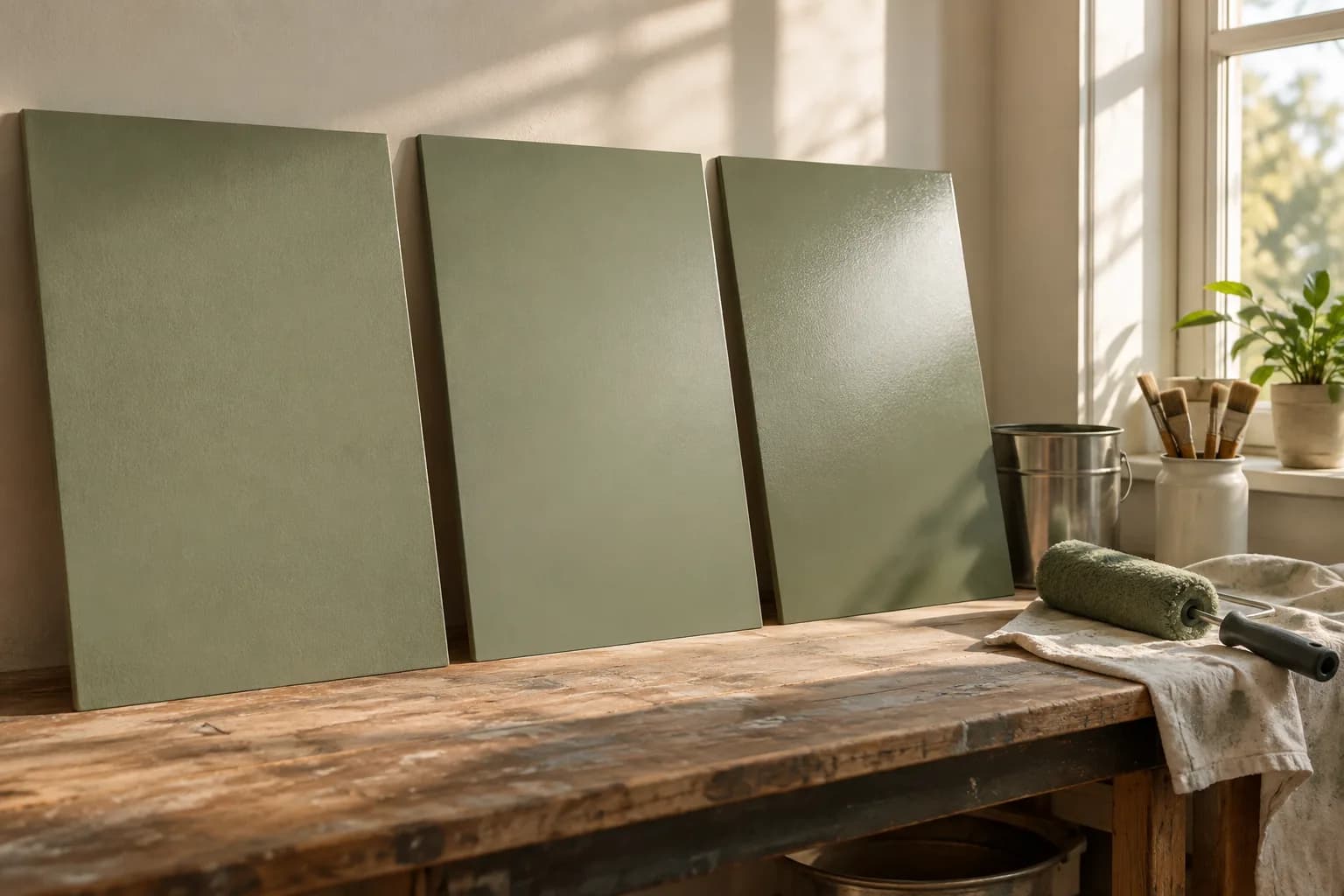
Compare the same color in the shortlisted products and finishes when possible. Label every sample clearly. If the paint store's sample product differs from the intended final coating, ask what the sample can tell you about color and what it cannot establish about the final sheen or durability.
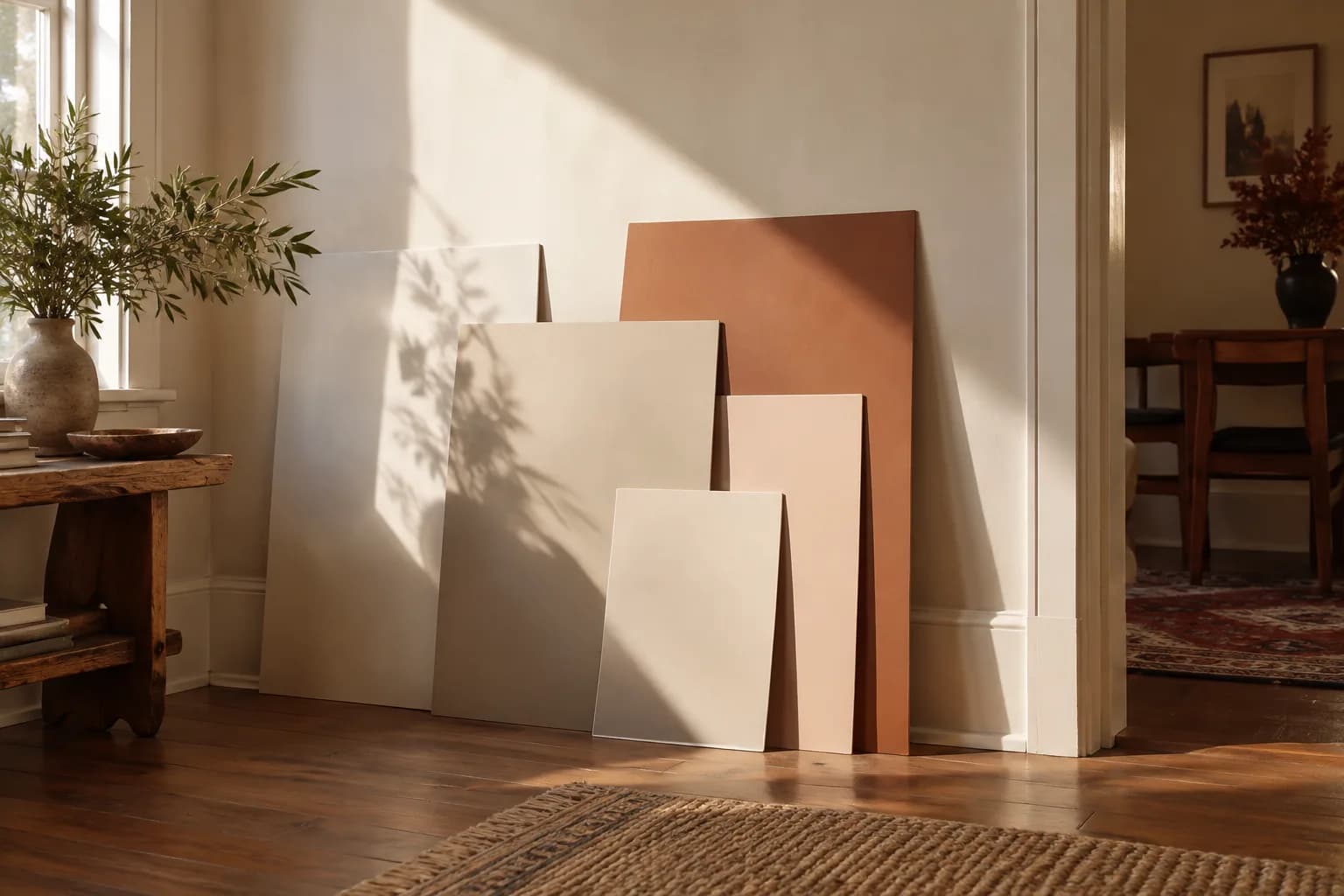
Place samples where they will receive representative room light. Include the wall beside a window, a darker area and the view from the room entrance. Inspect at the times you use the space, such as breakfast daylight and evening lamp light.
Keep the comparison manageable. Two carefully labeled options often reveal more than a collection of unrecorded patches. Write down the specific difference you notice: a highlight near the window, visible texture from the sofa or a stronger-looking color under a lamp. That creates a basis for a decision beyond "one looks better today."
Our paint color and room-light guide covers the lighting side of this exercise in more detail.
Work through three everyday examples
Consider a quiet bedroom with an older wall that has several sound but visible repairs. The owner prefers a subdued surface and rarely washes the walls. A suitable matte product is worth sampling alongside eggshell, with the preparation standard discussed before ordering.
Now consider a narrow hall where coats brush the wall and fingerprints recur near the door. Start by identifying products intended for that cleaning pattern, then compare their finishes in the hall's light. The practical choice may be an eggshell or satin, or a documented washable matte; the product information should resolve the shortlist.
Finally, consider a kitchen wall away from direct appliance heat but exposed to occasional splashes. Identify the substrate and expected cleaning first. Check that the selected coating is appropriate for the location, and do not transfer a recommendation for ordinary walls to cabinets, counters or surfaces requiring a different coating system.
These examples are decision exercises, not product rankings. Their purpose is to make room use and appearance visible in the same discussion.
Give trim, doors and ceilings their own entries
A room does not have to use one sheen everywhere. Walls, ceiling, doors and trim can have different products and finishes, provided each is suitable for its surface. List them separately in the paint schedule so a verbal request for "satin white" does not become the instruction for the whole room.
Consider transitions that are visible together: a wall beside glossy existing trim, a painted door against an unchanged frame, or a ceiling meeting an accent wall. Put the samples near those surfaces. A finish that looks appealing alone may create a contrast you did not intend.
If only one wall is being painted, decide whether the change in sheen relative to adjacent walls is acceptable. Matching a color code does not guarantee a consistent overall appearance when the products, age or finishes differ.
Plan for cleaning and future touch-ups
Ask for the chosen coating's drying, recoating, curing and cleaning guidance. These describe different stages, and a surface that feels dry is not automatically ready for scrubbing or prolonged contact with furniture. Follow the product documentation rather than applying a generic overnight rule.
Record the room, wall, product, color, base, sheen and application date. Keep any leftover paint only under the manufacturer's recommended storage conditions. Good records improve future maintenance decisions, although they cannot guarantee a patch will disappear on an aged wall.
Our touch-up or full-wall repaint guide explains how appearance and application differences affect that later choice. If uniformity is important, agree on the boundaries of any future repaint before starting a collection of small patches.
Put the final selection in writing
A useful finish schedule includes the exact product and sheen for each surface, the approved color, required preparation, sample approval and any known limitations in the existing wall. Include which doors or trim remain untouched and whether the ceiling is part of the project.
Before ordering, confirm that the chosen color is available in the intended product and finish. Check the final labels against the schedule when materials arrive. A familiar color name on the wrong product is still a mismatch.
If you want help comparing options, see interior painting or request an estimate with room photos and a description of the cleaning your walls need. Include the finish samples you prefer so appearance and preparation can be discussed together.