Quick answer
Before a cleaning visit, choose a secure, comfortable arrangement for your pets, tell the team which animals are home, and agree on who controls doors and room transitions. Identify pet bowls, toys, bedding, and any areas requiring special product instructions. Keep animals away from active cleaning and allow the required drying, rinsing, and ventilation steps before they return.
You do not need to remove every trace of pet hair before booking. The useful preparation is making the home workable and describing the actual condition. Our general cleaning preparation guide covers clutter and access; this guide focuses on the extra decisions a pet household needs.
Describe the household before the appointment
Tell the provider the type and number of animals, where they normally stay, and which ones react to visitors, equipment, or open doors. A friendly dog and an escape-prone cat require different plans. Do not assume a team member can supervise either animal while cleaning another room.
Mention relevant constraints without trying to diagnose them: the vacuum frightens the dog, the cat hides behind the washer, or a bird lives beside the kitchen. If an animal has a veterinary restriction, share the practical instruction needed for the visit and obtain veterinary advice when product use is uncertain.
ASPCA's household-product guidance emphasizes following cleaning-product labels and specifically advises veterinary guidance when using cleaners around birds because of their sensitivity to fumes. It also notes that enzyme-based products should dry before pets return. “Natural,” a pleasant scent, or a familiar brand does not replace instructions for the actual product and animal.
Choose one workable separation plan
A plan can involve an owner taking the dog out, an appropriate closed room, or another familiar arrangement the owner has prepared. Decide it before the team arrives. Consider the animal's normal needs, the expected visit, and whether that space is also supposed to be cleaned.
A closed room needs a clear instruction on the door and in the visit notes. If the pet room must be cleaned, agree that the owner will move the animal to another prepared area before that stage. The team should not have to open a carrier, move a cage, or handle an unfamiliar pet as an improvised solution.
Think through the path between the entrance and work areas. A pet gate may be useful in some households but should not be assumed to secure an animal that can jump or push it. Keep needed exits and walkways usable. Ask the provider to stop and contact you if the agreed separation fails, rather than continuing around a loose animal.
Assign door responsibility
Cleaning equipment comes through the entrance, and supplies may be carried in more than once. Name the person responsible for securing animals before arrival. Avoid the vague instruction “please watch the cat,” which makes everyone responsible without defining what anyone should do.
Tell the team which doors must stay closed and whether any interior latch is unreliable. Confirm the same information with a household member who might return midway through the visit. A successful morning plan can unravel when someone opens the pet room without knowing cleaning is still underway.
For an unattended appointment, discuss whether the provider accepts the proposed pet arrangement. Do not leave an animal roaming and rely on a doorbell camera as supervision. If owner involvement is necessary for room changes, schedule the visit when that involvement is available or leave the protected room outside the cleaning scope.
Make product information specific
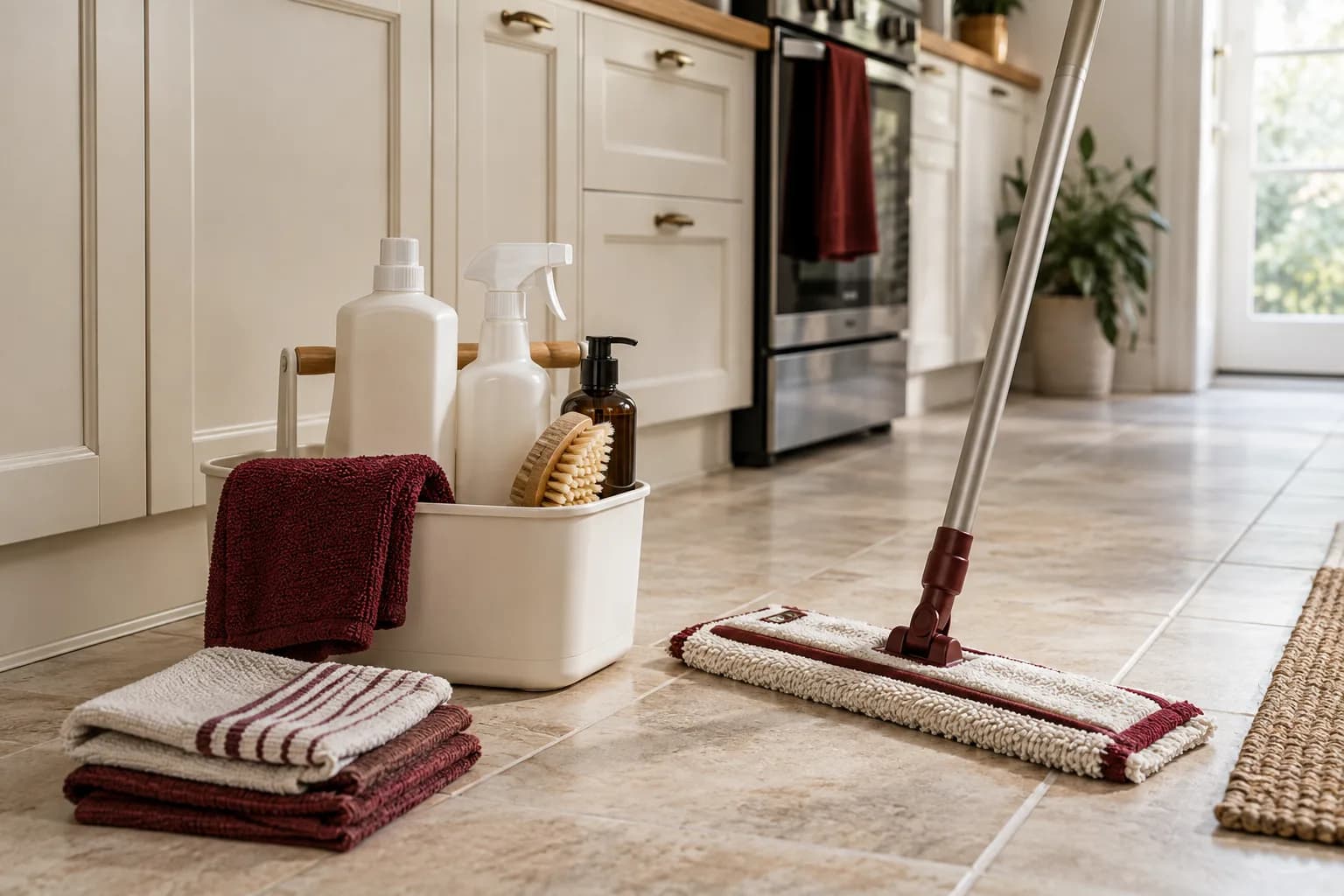
If you want a particular cleaner used, provide its original labeled container and ask whether it is compatible with the surface and the agreed task. Do not leave a reused bottle marked only “pet safe.” The team needs the actual directions, not a household nickname for a mixture.
The CDC's home-cleaning guidance recommends products appropriate to the surface, following directions, and not mixing chemicals. Tell the team about anything you already applied, including a spot treatment still on a rug or floor. Avoid pre-treating a questionable area with several products while waiting for the appointment.
You can request a discussion of fragrance preferences or surface restrictions in advance. Do not turn those preferences into an assurance that any product is harmless to every animal. If you need specific veterinary guidance, resolve that before the cleaning plan is finalized rather than asking a cleaning provider to make a medical judgment at the door.
Separate hair, ordinary soil, and specialized cleanup
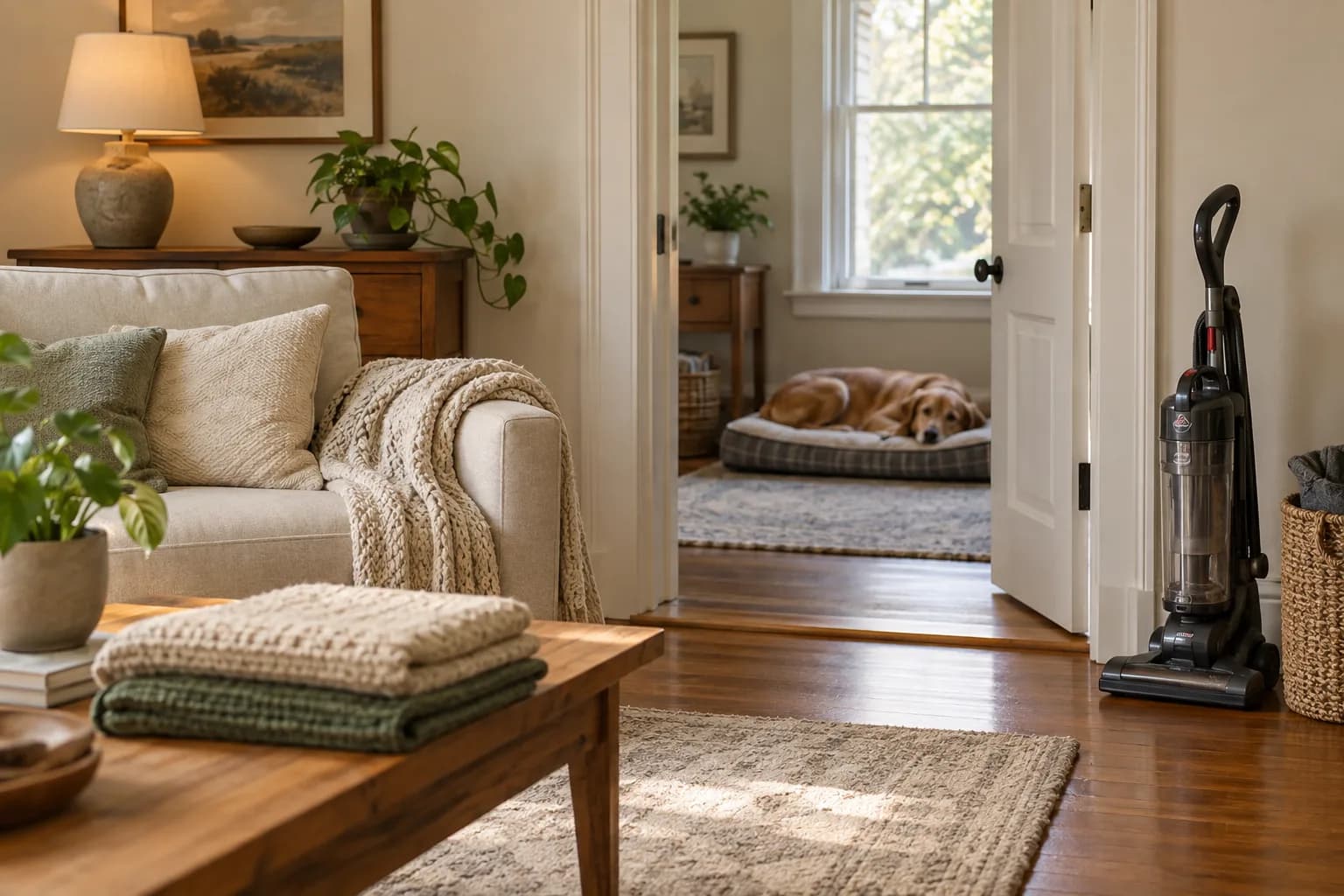
Describe what you can see. Hair along baseboards, muddy tracks, litter scattered outside a box, and a stain on upholstery are not interchangeable tasks. A photograph of the affected area can help, provided it does not expose private household details.
Ask whether pet-hair removal from upholstery, laundering pet bedding, or cleaning around litter equipment is included. These should not be silently added to a standard surface-cleaning appointment. Emptying or moving pet supplies may remain the owner's responsibility.
Repeated accidents, strong persistent odors, pest activity, or contamination beneath a surface may need a different assessment. Do not expect a routine wipe-down to establish what is happening inside flooring or padding. Explain the condition before booking so the provider can confirm suitable scope or identify that another specialist is needed.
Example: cleaning around a cat's quiet room
Consider a home with two cats that retreat to a bedroom when visitors arrive. The owner wants the kitchen, bathroom, hall, and living room cleaned. The bedroom is intentionally excluded for this visit, with the cats, their usual essentials, and a clear door note already in place.
The owner clears loose toys from the hall and moves feeding bowls away from the kitchen work area. The team knows not to open the bedroom. Before releasing the cats afterward, the owner checks that equipment and products are removed and that the applicable surface directions have been satisfied.
On a later visit, the owner can arrange a different protected space if that bedroom needs cleaning. This is more workable than repeatedly relocating frightened cats during one appointment. The practical tradeoff is explicit: a smaller accessible cleaning area today, with the pet room handled separately when an appropriate arrangement exists.
Plan the end of the visit too
Discuss the return-to-room process before work starts. The answer depends on the products and surfaces used, including any label requirements for rinsing or drying. A floor looking less shiny is not a universal test that all instructions have been satisfied.
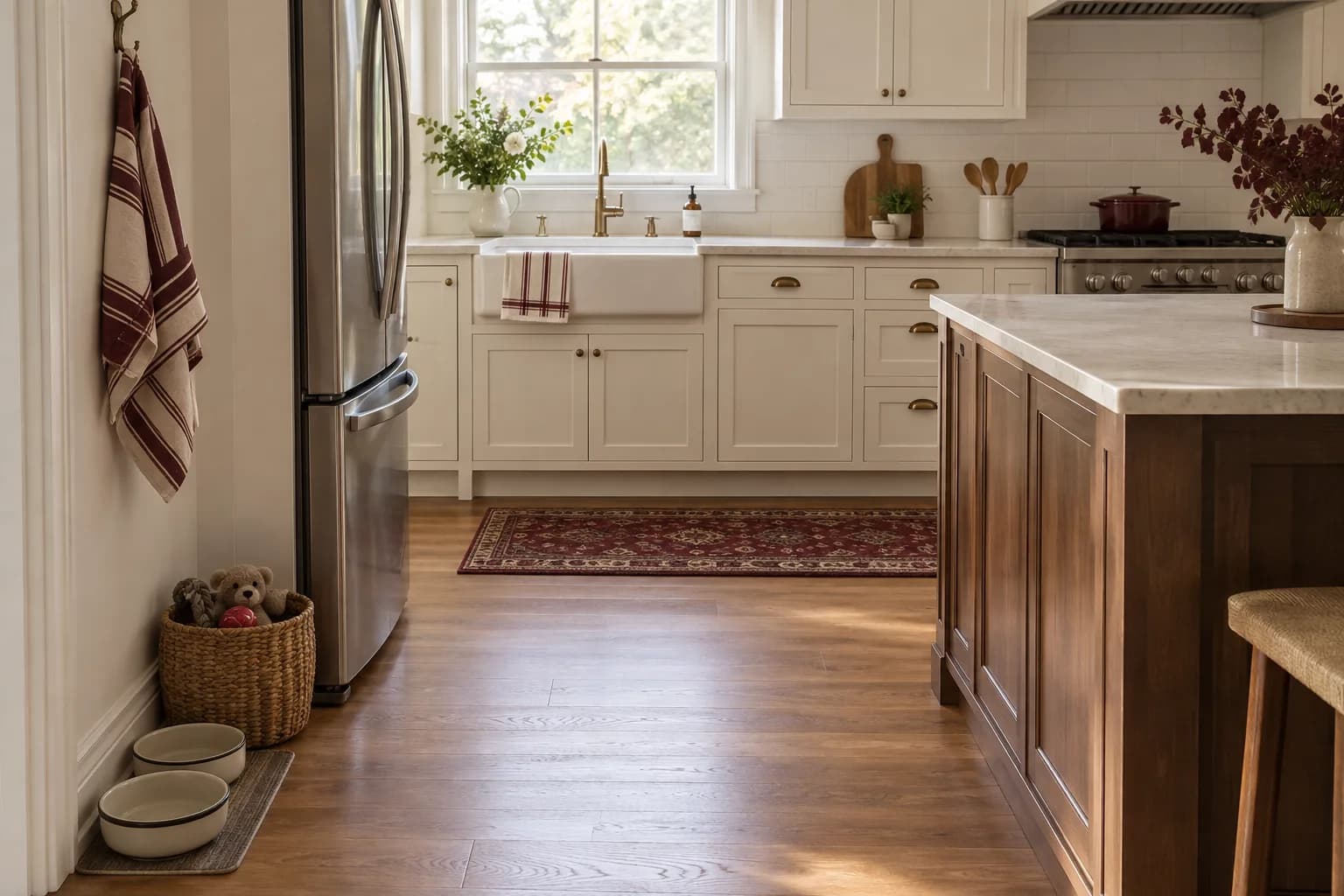
Ask where pet bowls, toys, and bedding will be left. Put them back only after the surrounding area is ready. Keep pets away while trash, cleaning cloths, and product containers are gathered. A pet should not encounter an open supply bag merely because the main cleaning has finished.
If a pet may have contacted or swallowed a product, contact a veterinarian or animal poison-control resource promptly and have the product label available. Do not use this planning guide to decide treatment. The purpose of the visit plan is to prevent confusion about access and product use, not to manage an exposure after it occurs.
A pet-household preparation checklist
- Describe each animal and any known reactions to visitors or equipment.
- Prepare the agreed separation area before the arrival window.
- Identify who can move the pet if the room sequence changes.
- Mark doors that must remain closed and tell other household members.
- Move bowls, toys, and loose supplies out of the planned work area.
- Share labeled product restrictions and disclose previous spot treatments.
- Confirm whether pet-related detail tasks are included or excluded.
- Agree how the space will be checked before animals return.
When you request a cleaning estimate, include the pet arrangement and the areas that need extra attention. Our cleaning service page and cleaning-scope comparison can help you describe the visit you need without assuming that every pet-related task is included.