Quick answer
Standard cleaning maintains a home that's already generally clean and lived-in — surfaces, floors, bathrooms, kitchen counters, on a recurring basis. Deep cleaning does everything standard cleaning does, plus the spots that get skipped week to week: baseboards, inside appliances, behind and under furniture, buildup in grout and fixtures. Move-out cleaning is deep cleaning applied to an empty home, with an eye toward the specific things a landlord, property manager, or new owner will actually inspect. Booking the wrong tier is an easy way to end up with "that wasn't what I expected," and this guide is meant to prevent that. Exact checklists vary from team to team, so always confirm the scope when you book.
Standard cleaning: what it maintains
Standard (or "recurring") cleaning is built around upkeep, not restoration — it assumes the home is already in reasonably good shape and focuses on keeping it that way between deeper cleans.
Typically included:
- Dusting reachable surfaces, shelves, and furniture tops
- Vacuuming carpets and rugs; sweeping and mopping hard floors
- Wiping kitchen counters, stovetop exterior, and outside of appliances
- Cleaning and disinfecting bathroom sinks, toilets, showers/tubs, and mirrors
- Emptying trash and replacing liners
- Making beds (not changing linens, unless arranged separately)
Typically not included unless specifically requested: inside ovens or refrigerators, inside cabinets, baseboards, window tracks, or moving furniture to clean underneath.
Deep cleaning: what it adds
Deep cleaning covers the same rooms as standard cleaning but goes further into buildup that accumulates over weeks or months of normal living — the things a weekly clean naturally skips.
What deep cleaning typically adds on top of standard cleaning:
- Baseboards, door frames, and light switch plates
- Interior of the microwave, and often the oven and refrigerator on request
- Grout scrubbing and buildup removal in bathrooms and kitchens
- Ceiling fans, light fixtures, and vents
- Cleaning behind and under furniture and appliances that can be safely moved
- Window sills and tracks
- More detailed bathroom work — mineral buildup around faucets, soap scum in showers, grout lines
A useful way to think about it: if a task would normally need a step stool, moving furniture, or more than a quick wipe to address, it's a deep-clean task, not a standard one.
Move-out cleaning: what's different about an empty home
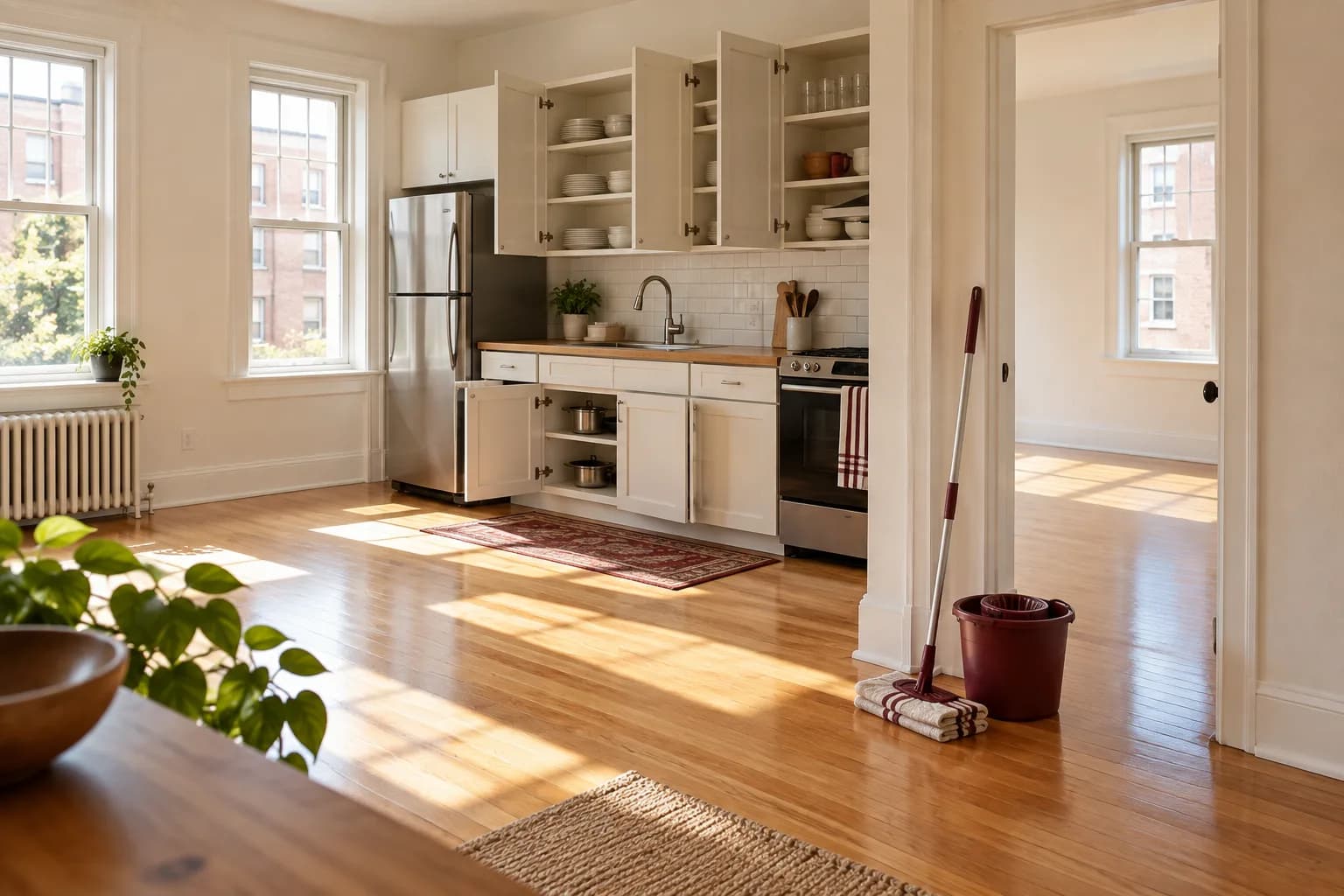
Move-out (or move-in) cleaning is essentially deep cleaning, but performed in a vacant space and aimed at a specific goal: leaving the home ready for whoever inspects it next — a landlord checking against the lease, a buyer at closing, or the next occupant.
What's typically specific to a move-out clean:
- Cleaning inside every cabinet and drawer (with nothing in the way)
- Full interior appliance cleaning (oven, refrigerator, dishwasher) since they're now empty
- Closet interiors, including shelving and floors
- Full window cleaning where accessible, inside and sometimes tracks/sills
- Wall spot-cleaning for scuffs, and baseboard detail throughout
- Nothing skipped for "we'll work around the furniture," since there typically isn't any
Worth checking before you book: move-out cleaning is a cleaning service, not a repair or maintenance service — it won't patch nail holes, touch up paint, or fix anything broken. If your lease requires those separately, plan for them as their own task. It also doesn't typically include hauling away abandoned items or trash left behind; confirm this specifically if the space isn't fully cleared out yet.
Side-by-side comparison
| Standard | Deep | Move-out | |
|---|---|---|---|
| Home occupied? | Yes, ongoing | Usually yes | No — vacant |
| Baseboards, vents, fixtures | Not usually | Yes | Yes |
| Inside appliances | Not usually | On request | Yes, typically included |
| Inside cabinets/closets | No | Sometimes on request | Yes |
| Furniture moved for cleaning | No | Where safely possible | N/A — space is empty |
| Best for | Regular upkeep | A reset after a long gap, or a first clean before switching to recurring service | Lease turnover, closing on a sale, preparing to list |
Choosing the right one
- If it's been a while since the last thorough clean — months, a recent renovation, or you're not sure the last cleaner did more than surface work — start with a deep clean rather than standard, even if you plan to switch to standard cleanings afterward.
- If you're moving out of a rental, check your lease for any specific cleaning requirements before booking, and mention them when you book so nothing expected is missed.
- If you're preparing to sell or list a home, a move-out-style clean (even if the home isn't fully empty yet) covers more of what a buyer notices — inside cabinets, baseboards, fixtures — than a standard clean would.
- If you're just not sure, describe the situation (how long since the last real clean, whether the home is occupied, what the goal is) rather than guessing at a tier name — the right scope follows from the situation, not the label.
A note on cleaning products
If you have specific surfaces that need gentler products — natural stone, hardwood, or finishes that react to certain chemicals — mention that when you book. For general reference, the EPA's Safer Choice program says that before a product can carry its label, "EPA reviews all chemical ingredients, regardless of their percentage in the product," and that labeled products "must perform comparably to conventional products." It's a reasonable starting point if you're comparing cleaning products for your own use. Keep in mind the label speaks to ingredients and cleaning performance in general — whether a product is suitable for a particular stone or finish is still a question for the surface maker's care instructions.
Compare task lists before comparing package names
One company's deep clean may resemble another company's first-visit clean. Ask for the actual included tasks and access assumptions. “Kitchen included” could mean counters and appliance exteriors, or it could include an empty refrigerator and oven interior. Those are materially different scopes even though the room name is the same.
Use a few specific examples when requesting a quote: grease on the upper cabinets, shower-door residue, dusty baseboards, or an empty pantry with shelf liner. Mention the surface material when you know it. Photos help show the condition, but avoid including private paperwork or people unnecessarily.
Also describe what the space will look like at arrival. An occupied home with toys and laundry across the floors requires a different plan from an empty apartment. Cleaning, organizing possessions, hauling unwanted items, and moving furniture are separate activities. A package label should not be used to quietly bundle them together.
Choose priorities when the budget or time is limited
You can ask for a focused visit instead of stretching an unclear “whole-home deep clean” across too little time. For example, prioritize the kitchen and bathrooms, then accessible floors, while leaving closets and interior windows for another visit. Confirm that arrangement before the booking so the team knows what a successful result means.
A first visit may spend more effort on buildup, with later visits maintaining the result. That does not mean every household needs the same recurring interval. Pets, cooking, occupancy, the surfaces present, and the work you do between visits all affect the plan. Review the actual condition after the first service rather than committing to a schedule based only on square footage.
Know which conditions cleaning cannot resolve
A worn finish, damaged grout, a leaking seal, or moisture inside a wall is not simply a more stubborn cleaning task. Aggressive treatment may damage the surrounding material without solving the cause. If the team discovers an uncertain surface or a condition outside the agreed scope, pausing for a decision is the appropriate response.
Specialized contamination, pest problems, and hazardous materials need the relevant specialist rather than a normal cleaning booking. Tell the provider about known issues before the visit. That lets everyone plan correctly and avoids confusing an ordinary service with remediation.
At handover, review the agreed tasks together and note any exclusions or follow-up items. For a move-out, keep that record separate from the landlord's inspection; no cleaning package decides deposit eligibility. For an occupied home, note the few areas that accumulate buildup fastest so the next visit can be more accurately planned.
FAQ
How often should a home get a deep clean if it also gets regular standard cleanings? There's no universal schedule — it depends on the household, pets, allergies, and how thorough the standard cleanings are. Most households treat deep cleaning as a periodic reset rather than something that happens every visit; describe your home and routine when you book and ask what cadence makes sense.
Does move-out cleaning guarantee I'll get my security deposit back? No — deposit return depends on your lease terms and your landlord's inspection, which can include things beyond cleanliness (damage, unpaid rent, etc.). A thorough move-out clean addresses the cleaning portion of that equation, not the whole lease agreement.
Can I book a deep clean for just one or two rooms instead of the whole house? Often, yes — it's worth asking about when you book if your main concern is, say, just the kitchen or bathrooms rather than the entire home.
What should I do before the cleaning team arrives? Mainly just clear obviously personal or fragile items you'd rather not have moved, and mention any surfaces needing special care. You generally don't need to clean before a cleaning visit — that's the point of booking one.
Booking the right scope the first time
Describing your actual situation — how long since the last deep clean, whether the home is occupied, what you're preparing for — gets you a more accurate scope and a clearer price up front than guessing at a tier name. See our cleaning services for details, or request an estimate and tell us what's going on; we'll recommend the right level before anyone sets a date.