Quick answer
Before a cleaning visit, do three things: clear personal items and clutter off surfaces and floors, secure pets and valuables, and leave a note (or tell the team) about anything fragile, off-limits, or already scheduled for special attention. You do not need to pre-clean or organize every drawer. Dishes, laundry, and organizing are included only when explicitly agreed; otherwise, clear them from the surfaces being cleaned.
Why a little prep makes a real difference
A cleaning visit is priced and timed around cleaning — wiping, vacuuming, scrubbing, mopping. It is not priced around picking up laundry piles, sorting mail, or finding a place for forty toys currently covering the living room floor. When a team has to clear surfaces before they can even start wiping them, that time comes out of the cleaning itself. A few minutes of prep the night before means more of the visit goes toward the parts that actually need a professional: bathrooms, kitchens, floors, and the buildup you don't get to during a normal week.
What to do before the team arrives
Clear surfaces, don't deep-clean them
Pick up papers, mail, toys, clothes, and personal items from countertops, tables, dressers, and floors. You're not cleaning the surface — you're just giving the team a clear area to clean. A countertop covered in mail can't be wiped down properly no matter how good the cleaner is.
Secure pets
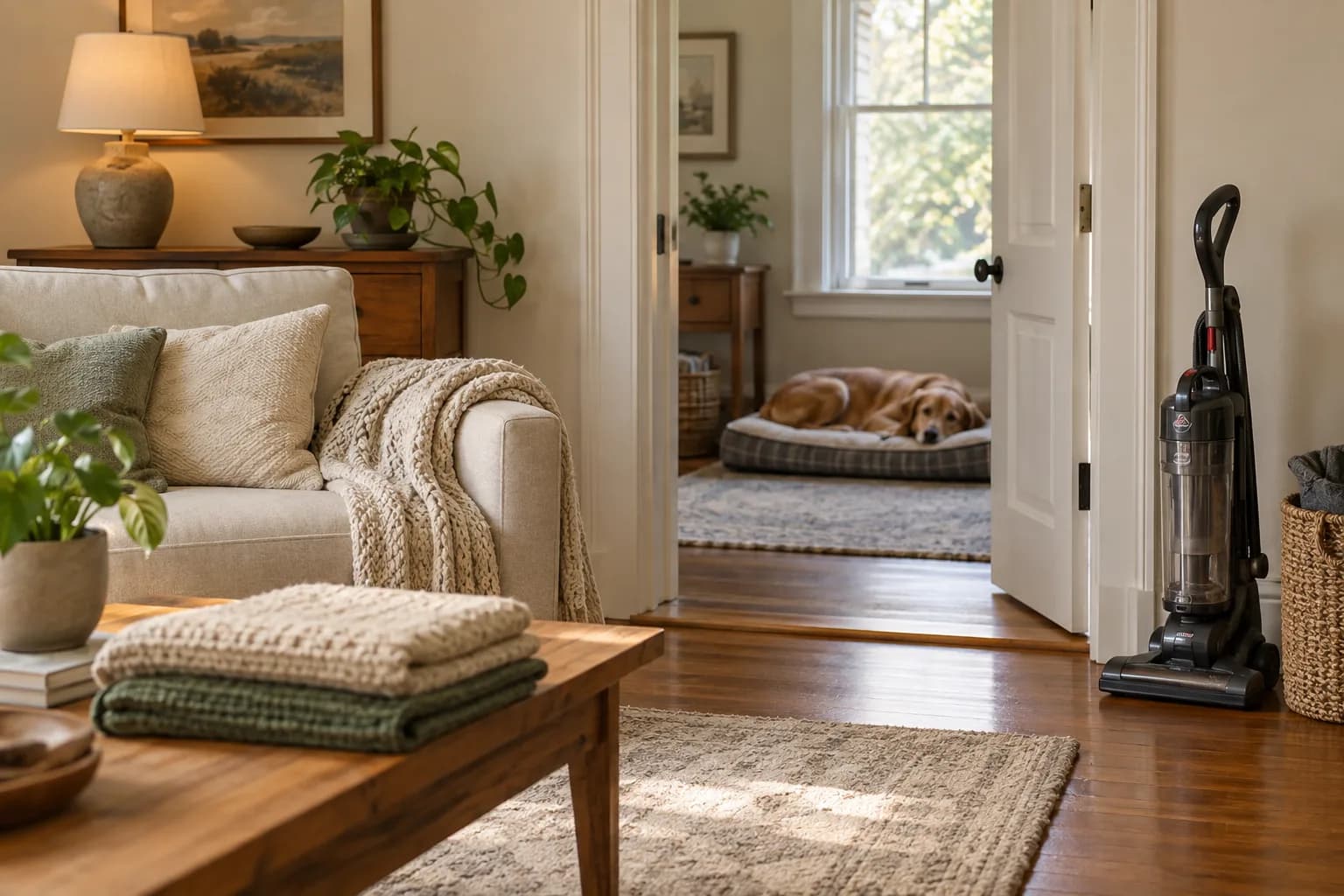
Cleaning involves open doors, moving equipment, and unfamiliar people moving through the house. If your pet is anxious around strangers, escapes easily, or reacts to vacuum noise, keep them in a comfortable, secure indoor area arranged for the visit. This protects the pet and lets the team work without stopping to manage an animal.
Put away valuables and anything irreplaceable
This isn't about trust — it's common sense with any visit to your home, cleaning or otherwise. Jewelry, cash, important documents, medications, and sentimental or fragile one-of-a-kind items are easiest to just put away in a drawer or safe. It removes any ambiguity and any risk of accidental damage to something that can't be replaced.
Note anything off-limits or fragile
If there's a room you don't want touched, a shelf of breakables you'd rather dust yourself, or an antique surface that needs a specific product, say so before the visit starts, not after. A quick note ("please don't move papers on the desk" or "the vase on the mantel is loose, please skip it") takes ten seconds and prevents an awkward conversation later.
Handle laundry and dishes separately
Unless a load of laundry or a sink of dishes is explicitly part of what you booked, get them out of the way first. A sink full of dishes usually isn't part of a standard cleaning and just eats into the time budgeted for the rest of the kitchen.
Confirm access
Make sure the team can actually get in — a code, a key left with a neighbor, or someone home to let them in. Confirm parking if you're in a building or a tight street, which matters in older Pittsburgh neighborhoods with narrow streets and limited parking near rowhouses.
What you don't need to do
It's worth saying plainly, because it's easy to over-prepare out of habit:
- You don't need to clean before the cleaners come. Scrubbing the bathroom the night before defeats the purpose of booking a cleaning.
- You don't need to vacuum first. Floors are part of the job.
- You don't need to empty every closet or organize every drawer unless organizing is specifically what you booked (some visits include this — check what's included).
- You don't need to be home the entire time, as long as access and instructions are clear.
- You don't need to go shopping for special cleaning products. Ask when you book whether supplies are included. If you have surfaces that need a specific product (natural stone or a waxed antique, for example), mention it rather than leaving out a row of random bottles.
One safety note if you plan to pre-treat anything
If you're tempted to spot-treat a stain yourself before the visit, be careful about mixing cleaning products — including ones already sitting on a surface. According to the Washington State Department of Health:
- Bleach plus ammonia (found in some glass and window cleaners) produces toxic gases called chloramines, which can cause coughing, shortness of breath, chest pain, and eye, nose and throat irritation.
- Bleach plus acids (such as vinegar, toilet bowl cleaners, drain cleaners and rust removers) gives off chlorine gas, which irritates the eyes and airways even at low levels and is more dangerous at higher exposure.
The department's advice is simple: don't mix bleach with ammonia, acids or other cleaners, and read the product label before using anything. It also helps to tell the cleaning team if you've applied something unusual to a surface recently, so nothing gets layered on top of it.
A short pre-visit checklist
| Task | Do it? |
|---|---|
| Clear countertops, tables, floors of personal items | Yes |
| Deep-clean before the visit | No |
| Secure pets in an agreed, comfortable indoor area | Yes |
| Put away valuables and fragile one-of-a-kind items | Yes |
| Note off-limits rooms or special-care surfaces | Yes |
| Wash dishes / do laundry (unless included in your booking) | Yes, if not part of the job |
| Confirm entry access and parking | Yes |
| Buy or leave out extra cleaning products | Not necessary |
Plan the visit around the rooms you actually use
A useful preparation note names outcomes, not just rooms. “Kitchen and bathroom first; skip the guest bedroom if time is tight” gives the team a clear sequence. “Make everything perfect” leaves the most important decision until the clock is running. If a particular task matters, such as removing residue from a shower door or cleaning an empty refrigerator, confirm that task explicitly rather than assuming it belongs to a package name.
For an occupied home, choose one staging area for loose belongings. A basket of charging cables and papers can stay on your desk while the team cleans the rest of the room; there is no need to spread those items across freshly cleared surfaces. Keep medicine, keys, children's small toys, and pet supplies somewhere you can still reach them. A rushed last-minute tidy that hides everything often creates more work afterward.
For example, imagine a household working from home during the visit. The useful plan is to clean the office before the first call, close that door, and work through the rest of the house afterward. If the call schedule changes, tell the team before equipment is set up. Room access and noise matter as much as square footage when planning a productive visit.
Make special-care instructions usable
A material name is more helpful than a product preference alone. Tell the team that the counter is marble, the floor is waxed wood, or the cabinet finish was recently painted. If you have the manufacturer's care sheet, share it. “This surface stains easily” is a reason to pause and identify the finish, not to try a stronger cleaner.
Point out existing damage before work begins: peeling finish around a sink, a loose towel bar, chipped tile, or a leaking dispenser. Cleaning may reveal damage that was hidden by buildup, but it cannot restore a failing coating or repair a leak. A photo and a brief note keep those separate issues clear.
Prepare a short handoff with these details:
- Which rooms are first priority and which are excluded.
- Whether anyone will be sleeping, working, or taking calls.
- Where pets will remain and which doors must stay closed.
- Which surfaces have written care instructions.
- Whether the team should check with you before moving a fragile object.
At the end, walk through the agreed areas together if possible. Check the surfaces and tasks you booked, rather than judging only by scent or the arrangement of pillows. Mention a missed spot while the team can see it. Save repair questions for a separate scope so the cleaning visit ends with a clear result.
FAQ
Do I need to be home during the cleaning? No, as long as the team has a clear way in and knows how to reach you if something comes up.
What if I forgot to prep and the house is cluttered? Let the team know before they start. They can usually still clean, but heavy clutter may mean less time for detail work like baseboards or inside cabinets, since clearing surfaces takes priority.
When do I pay, and how does pricing work? That depends on how you booked the visit — check your confirmation or ask directly. Either way, you should know the full price or the full hourly rate before the visit starts, not discover new fees after the job is done.
Can I ask for specific rooms to be skipped? Yes. Just say so ahead of time so the visit is planned around it rather than adjusted mid-visit.
Get it scheduled
A little prep goes a long way toward making a cleaning visit worth every minute. When you're ready, request an estimate and tell us about your space, so what's included is clear up front. You can also see the full range of what we cover on our cleaning services page.