Quick answer
A door that sticks, drags, or won't latch usually comes down to one of five things: loose hinge screws, a frame that has shifted slightly, built-up paint, wood swelling in humid weather, or a strike plate that no longer lines up with the latch. Each has a different fix, and most can be solved without replacing the door. The key is figuring out which one you have before you reach for a plane. Planing is the fix people try first, and because it removes wood for good, it should usually be the last.
Start with where it's rubbing
Close the door slowly and watch, or feel, exactly where it makes contact. Look at the gap between the door and the frame, too: an even gap all around means the door is hanging straight, while a gap that's wide in one spot and tight in another tells you which way it has moved.
- Rubs at the top corner on the latch side, and the gap near the top hinge has widened → the top hinge has likely loosened and the door is sagging
- Rubs at one spot, with hinges tight and gaps otherwise even → possible frame shift or paint buildup at that spot
- Drags along an edge where you can see or feel a thick, uneven ridge of paint → paint buildup
- Sticks more in humid weather and less when the heat is on → seasonal swelling
- Closes fine but the latch won't catch, or catches only with a push → strike plate alignment, not a door-size problem at all
A strip of paper or a business card helps: slide it along the gap with the door closed and note where it pinches.
The five common causes, and what fixes each
1. Loose hinge screws
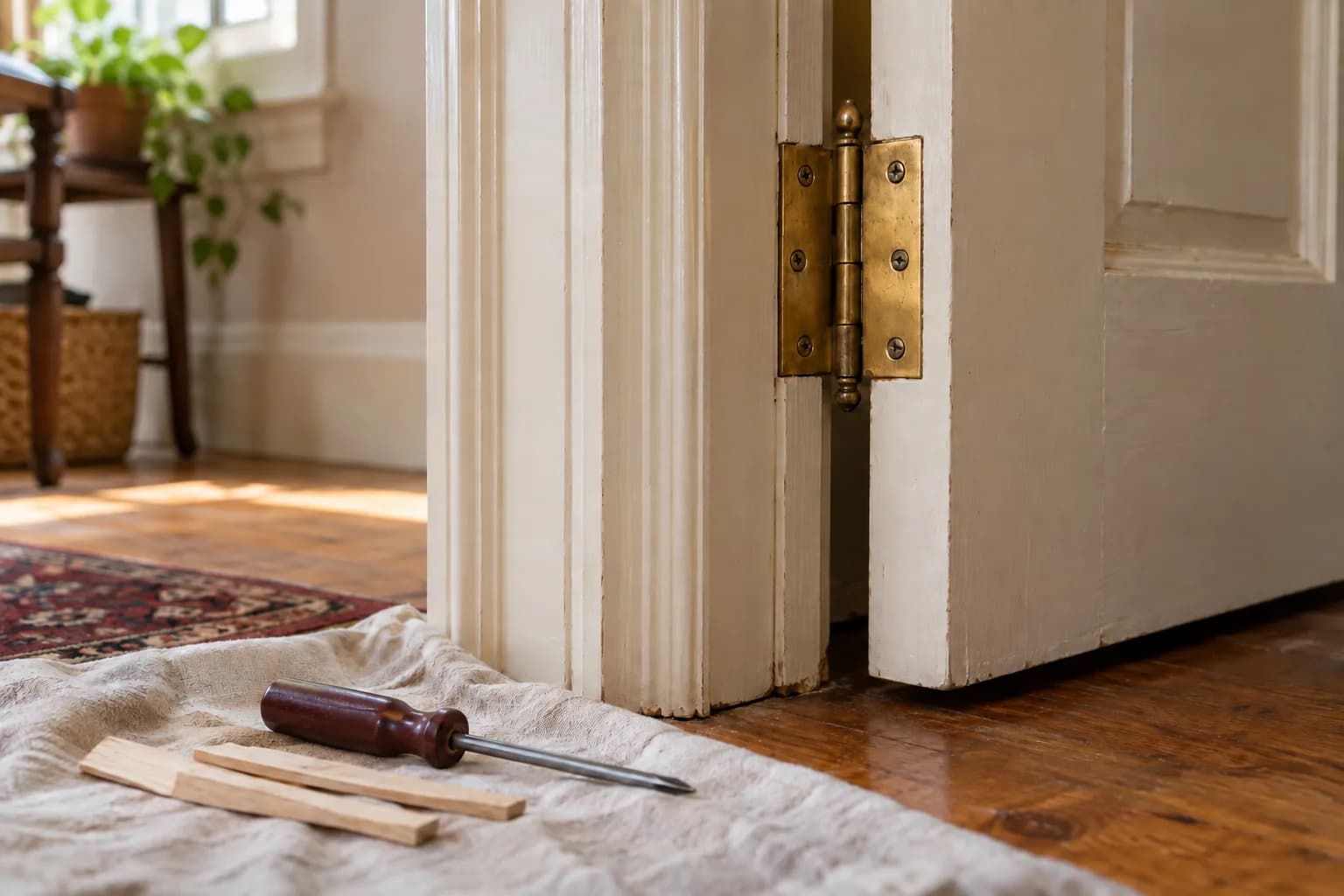
This is one of the most common causes and the easiest to check. Over years of use, screws holding the hinges to the door or jamb loosen, and the door sags just enough to rub.
Fix: Open the door and tighten every hinge screw, on both the door side and the jamb side. If a screw spins without tightening, the hole is stripped. A common fix is to remove the screw, pack the hole with wooden toothpicks or a golf tee coated in wood glue, let the glue dry, trim it flush, and drive the screw back into the fresh wood. Another option is a longer screw that reaches solid framing behind the jamb; if you try that, use one that fits the hinge's countersunk holes and drill a pilot hole first. This takes a few minutes and often solves the problem without touching the door itself.
2. A frame that has shifted slightly
Houses move over time, and a door frame can go slightly out of square even when nothing is wrong structurally. A door that closed fine for years starts catching at one spot.
Fix: With the hinges already tight, small adjustments often do it: slightly tightening or loosening a hinge, adding a thin cardboard shim behind one hinge leaf to change the angle the door hangs at, or lightly sanding the one spot that rubs. If a door suddenly sticks badly alongside new or widening cracks in nearby walls, or won't close at all, have it looked at rather than just sanding it to fit.
3. Built-up paint
Every repaint adds a layer. After several rounds, paint on the door edge, the jamb, and the door stop can get thick enough to drag, especially if a door was painted and closed before the paint fully cured.
Fix: Look for ridges, drips, or a tacky, rubbed-shiny spot where the door contacts the frame. Sanding the buildup back at the contact point usually fixes it without removing any wood. One caution before sanding in an older house: EPA notes that a home built before 1978 "is more likely to have lead-based paint," and that repair work that disturbs painted surfaces in older homes "may create large amounts of lead dust." If your home is that old, find out whether the paint contains lead before you sand, and if it does, EPA recommends hiring a lead-safe certified contractor (EPA).
4. Humidity and seasonal swelling
Wood takes on moisture from the air and gives it back, so wood doors can swell in humid months and shrink during the dry heating season. If a door sticks only part of the year, this is a likely cause, and the fix is usually patience.
Fix: Try the other four causes first; a loose hinge can make seasonal swelling show up as sticking when the door would otherwise clear. If a door still binds badly every humid season, a small, even amount can be planed from the latch edge (the lead-paint caution above applies here too, since planing cuts through old paint). Do it carefully, because wood removed in summer is gone in winter too, and the door may look gappy then. Seal any bare wood edge with paint or finish afterward so it doesn't soak up moisture even faster.
5. Strike plate misalignment
Sometimes the door fits the opening perfectly and the problem is only at the latch. The strike plate on the frame no longer lines up with the latch bolt, so the door closes but doesn't catch, or needs a push to latch.
Fix: Rub a little lipstick, chalk, or a dry-erase marker on the latch bolt, close the door gently, and see where it marks the strike plate. If the mark is just outside the opening, carefully filing the edge of the strike plate opening a small amount often does it. If it's farther off, the plate can be moved up or down, which may mean filling the old screw holes and slightly enlarging the recess in the jamb. Also check whether the strike plate screws are loose, since that alone can let it shift.
Quick diagnostic table
| Symptom | Likely cause | Typical fix |
|---|---|---|
| Rubs at top latch-side corner, gap widened at top hinge | Loose top hinge | Tighten or repair stripped screw holes |
| Sticks at one spot year-round, hinges tight | Minor frame shift | Hinge shim or light sanding at that spot |
| Visible ridge or tacky paint at the contact point | Paint buildup | Sand it back (pre-1978 home: check for lead first) |
| Sticks only in humid months | Seasonal swelling | Rule out other causes; plane only as a last resort |
| Closes but won't latch | Strike plate misalignment | File the opening or reposition the plate |
A note on older Pittsburgh homes
Many older Pittsburgh homes still have their original solid wood doors and hardware. These doors tend to respond well to the fixes above, and they're worth keeping: solid doors have wood all the way through, while a hollow-core door has only a narrow solid edge, which limits how much you can plane. Older homes have also had decades to settle, so a door may be slightly out of square and still have worked fine for years. The goal is usually a door that closes and latches smoothly, not one that's perfectly even all the way around.
Record the symptom before changing the door
A useful door assessment starts with observations that do not alter the assembly. Note whether the door rubs before it reaches the frame, closes but does not latch, or needs lifting to engage. Photograph the visible gap around the closed door and any paint rub marks. If the behavior comes and goes, record whether it coincides with a season, a recent repaint, or a change elsewhere in the room.
Check the ordinary setting in which the problem occurs. A rug may be bunching under the door, an object may be caught near a hinge, or a new weather seal may be affecting closure. These observations help narrow the work without assuming that the door itself needs to be cut down. Do not force it repeatedly, especially if hardware is loose or the door feels unusually heavy or unstable.
For a hypothetical bedroom door that latches in winter but rubs in summer, immediate planing could create a different fit when conditions change again. A door that suddenly became difficult after a nearby repair needs a different history. Tell the person assessing it what changed and when, rather than simply asking for material to be removed.
Distinguish adjustment from a larger problem
The visible rub point is evidence, not a complete diagnosis. A technician may need to check the hinge attachment, door shape, frame, strike position, and floor clearance together. If several doors changed at once, or new cracks and movement accompany the sticking, treat that pattern as information requiring further assessment. Do not assume a longer screw or a larger latch opening addresses the underlying cause.
Some assemblies need particular care: exterior security doors, doors on an exit route, and labeled fire-rated doors should not be casually modified to make them close. Hardware or material changes may affect their intended operation. Identify the door type and seek the appropriate guidance before altering it. This article is not a determination of what work is permitted on a particular building.
In a rental, check the maintenance process and obtain approval before drilling, sanding, or changing hardware. Photos of the existing condition make the request clearer and help separate a longstanding issue from damage that appeared during attempted repairs. Keep the approved scope focused on the actual defect.
Define what a successful repair should do
After an approved adjustment, test more than whether the door shuts once. It should operate through its intended travel, latch as expected, and release normally using the handle. For a lockable door, confirm the agreed locking function from the relevant sides without leaving someone locked out. Check that nearby trim and the floor have not become new contact points.
Ask what was adjusted and what remained outside the scope. If the diagnosis points to damaged framing, an unsuitable door, or a condition that cannot be resolved by a minor adjustment, record that conclusion. A clear stop point is more useful than repeated cosmetic fixes that make the gaps larger while the original cause remains.
FAQ
Should I just plane the door if I'm not sure what's wrong? No. Try the quick, reversible fixes first: tighten the hinges, check the strike plate, and look for paint buildup. Planing is permanent, and doing it before ruling out the other causes is how a door ends up too loose in a different season.
My door sticks a little worse every year. Is that a bigger problem? A steadily worsening stick, especially together with new cracks or several doors starting to stick at once, is worth having looked at instead of adjusting over and over. It can point to ongoing movement rather than a one-time shift.
Can I fix a latch that won't catch without taking the door off? Usually, yes. Strike plate adjustments are made on the frame side, with the door still on its hinges.
Do exterior doors behave differently from interior doors? Often. Exterior doors are exposed to bigger swings in temperature and moisture, so seasonal movement tends to be more noticeable. Weatherstripping can also make an exterior door feel like it sticks when it's actually just compressing the seal.
When it's more than a quick fix
If you've worked through the list and a door still won't cooperate, or several doors are acting up at once, request an estimate with a couple of photos showing where it rubs. Our repair services cover everything from a single door adjustment to a list of small fixes, with the price shown up front before any work starts.