Quick answer
A solid estimate is built from a small set of concrete inputs: what the job actually is, how many hours similar jobs typically take, whether it needs one person or a crew, and what materials are involved. The biggest single lever you control is information — specifically, clear photos and complete answers before anyone quotes a number. Guess at the inputs, and you get a guess for an answer; describe the job accurately, and the estimate gets close to what you'll actually pay.
What actually goes into a number
An estimate isn't pulled from a price list per item — it's assembled from a handful of pieces:
- The task itself. Not just "TV mounting" but which kind: fixed, tilting, or full-motion; what size; whether wires need to be hidden; whether a mount is already provided or needs to be bought.
- A time range for that kind of task. Teams that do a category of work repeatedly build a rough sense of how long it takes — a range, not a single number, because real jobs vary.
- Crew size. Some jobs are safely and efficiently done by one person; others — a large piece of furniture, a big TV, anything heavy or awkward — genuinely need two people, which changes the labor cost.
- Materials. Some jobs need parts or supplies beyond labor: mounting hardware, cord covers, cleaning products, touch-up paint. The estimate should say whether you're expected to provide these or whether the team brings them (and at what cost).
- Site-specific risk. A wall that might be plaster instead of drywall, a walk-up with stairs, a room that's hard to access — these affect both time and approach, and a good estimate accounts for them rather than treating every home as identical.
Why photos make the number more accurate
A written or phone description of a job often leaves out details that matter a lot to the actual time and difficulty. "Medium-sized dresser" could mean a simple four-drawer piece with cam-lock construction, or a nine-drawer unit with a mirror attachment and back panel — very different assembly jobs. "My wall" could be drywall over studs, or century-old plaster and lath that behaves completely differently under a drill.
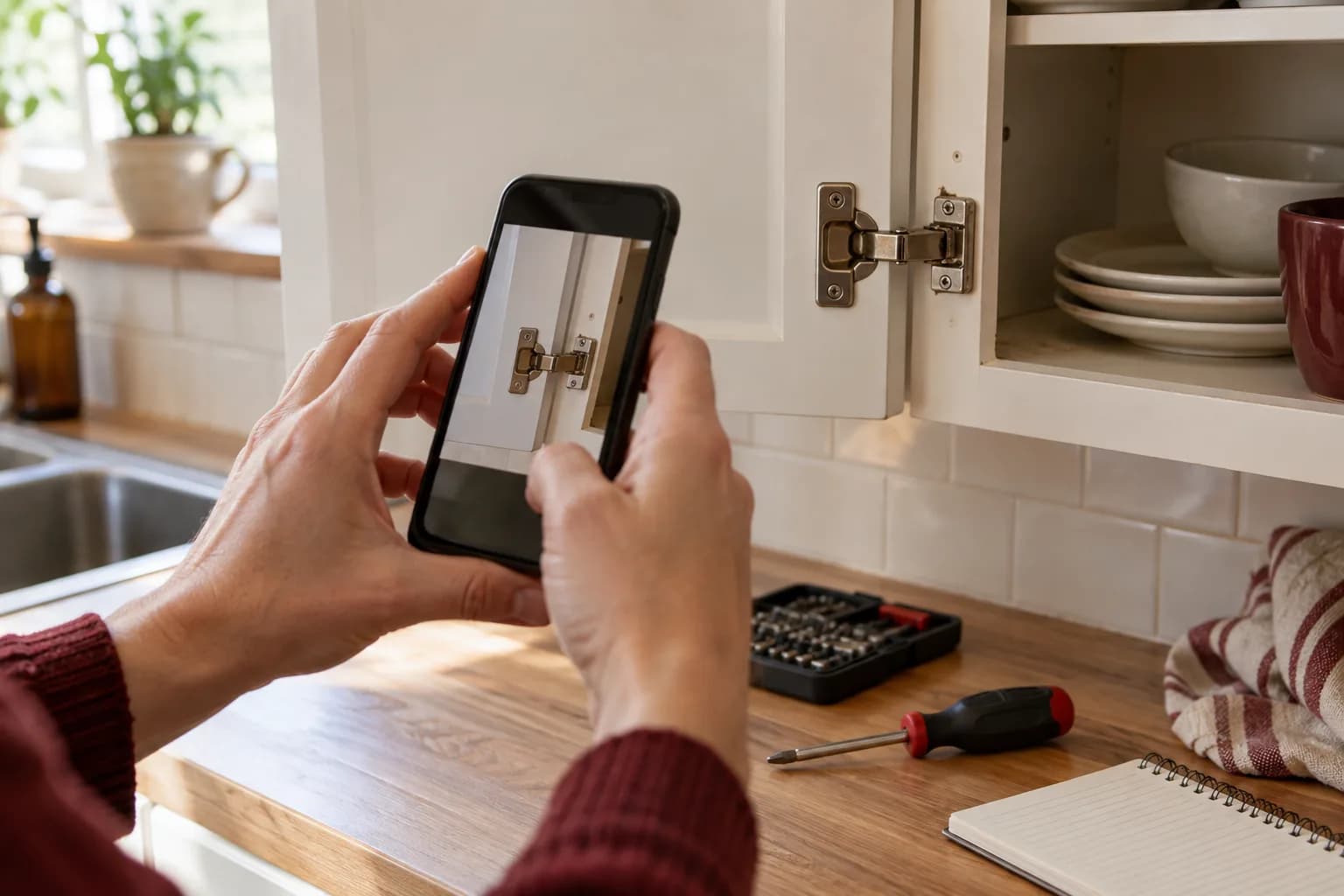
Photos close that gap. A few clear pictures let an estimator see:
- The actual item, its size, and its construction (for furniture, assembly jobs, and repairs)
- The actual wall or surface (for mounting, hanging, and painting jobs)
- The room layout, access points, stairs, and anything that could slow the job down
- Existing damage or wear, so it isn't mistaken for something the job itself caused
This ties into broader consumer advice: the Federal Trade Commission's guidance on avoiding home improvement scams says a written estimate should include a description of the work to be done, materials, completion date, and the price. Photos are a practical way to make that description accurate on both sides, especially for jobs quoted before anyone has visited in person.
What makes a genuinely useful photo
Not every photo helps equally. Before you submit photos with a request, aim for:
- Wide shot of the whole area — the full wall, the full room, the full piece of furniture, not just a close-up
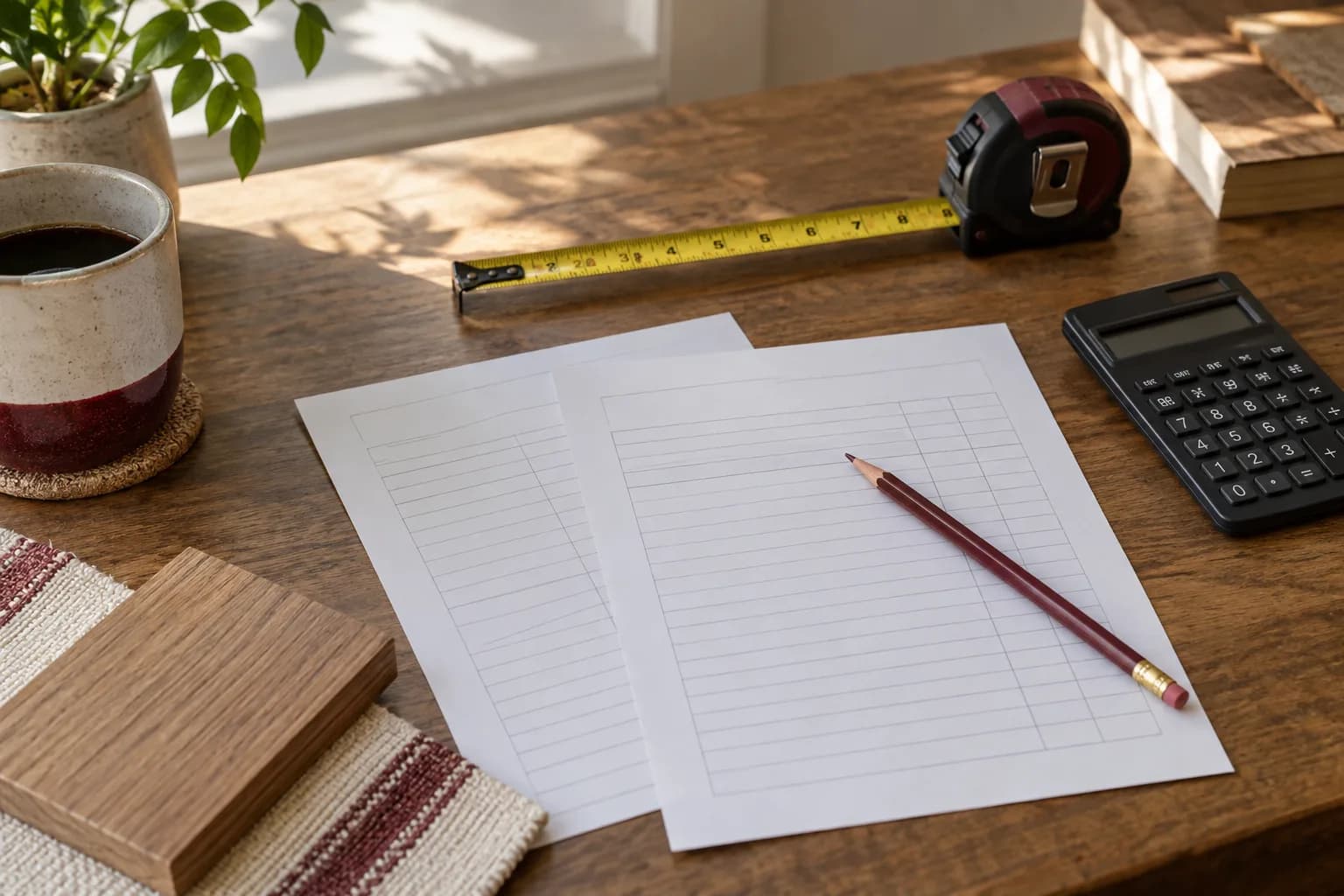
- A shot that shows scale — a doorway, a piece of furniture, or a tape measure in frame so size isn't a guess
- Good, even lighting — turn on the lights or shoot during the day; a dark or backlit photo hides exactly the details that matter
- Any obstacles or access issues — narrow hallways, stairs, tight parking, existing furniture in the way
- The label or model info, if visible — a manufacturer sticker, a box, or a manual can settle ambiguity in seconds
- Multiple angles for anything unusual — a crack, an odd mounting surface, a nonstandard outlet placement
Why a draft estimate is still a draft
Even a well-photographed request produces a draft, not a final locked number, for a simple reason: some things genuinely can't be confirmed from a photo — what is behind the wall surface, whether a stud lines up where it needs to, whether hardware included in a kit is complete. A responsible estimate says so plainly, usually as an assumption or exclusion ("price confirmed after photo review" or "assumes studs are available within mount width"). That's not evasiveness — it's the estimate being honest about what it does and doesn't know yet.
What a complete estimate should tell you
Whatever the format, a complete estimate should answer, in writing, before work starts:
- What exactly will be done, item by item
- How many people will show up
- The expected time range
- The price — as a fixed total, an hourly rate with an expected range, or both, clearly labeled
- What materials are included versus what you need to provide
- Any assumptions the number depends on, and what happens if one turns out to be wrong
What your Taskburgh price covers
The labor rate covers the people doing the work, scheduling, coordination and the platform that keeps the request, conversation and records together. These costs are part of the rate; they are not added a second time as a separate platform charge. Materials, agreed extras and any visit fee are identified separately.
If you ask the crew to purchase supplies, agree on a shopping budget before the store run. That discussion should include the approximate materials amount, any expected bank or transaction cost on that purchase, and whether the shopping service has a fixed fee or a time-based charge. Final purchase costs follow the agreed purchase and its records. An initial estimate is not an automatic percentage markup on every material purchase, and shopping minutes should not also be billed on the job timer.
A transaction cost incurred buying supplies is different from a surcharge for paying your invoice by credit card. Ordinary payment processing is covered by the quoted rate. If a credit-card surcharge applies, its eligibility and exact amount must be disclosed before you confirm payment. Tips remain optional.
Current Taskburgh estimates do not add sales tax. The team must confirm any applicable tax for the particular work, materials and service address before work or payment; the absence of a tax line does not mean the service is tax-exempt. A work-price comparison should not be read as an all-in after-tax promise.
How to read a price comparison
Compare the same job, crew and time basis, including each provider’s visit charge. Materials, shopping services, taxes and optional tips need matching treatment on both sides. A low headline hourly rate can be misleading when one quote has a minimum visit charge or assumes fewer people.
When your proposal includes a comparison, its sources, date, scope and exclusions should be visible. An average of a few documented local offers describes those offers, not the whole market. For hourly work, a comparison using the upper estimate is more cautious than one using the shortest possible visit. Your final time may still differ from the estimate.
Without comparable evidence, a specific savings claim is guesswork. A useful proposal can still give you clear scope, readable pricing and a single place to manage the work.
Send a small set of photos with a purpose
A useful photo set usually answers different questions rather than showing the same close-up repeatedly. Start with a wide view that explains the room and access. Add a view of the exact work area, then a close-up of the product label, defect, or connection that matters. Explain what each image is intended to show, especially when a problem is intermittent or hard to see.
For a hypothetical shelf request, show the intended wall, nearby doors and outlets, the shelf itself, and the supplied bracket or model information. Include the intended contents in your description. A photo can reveal layout constraints but cannot confirm everything behind the wall. The estimate should retain that uncertainty until the attachment method is assessed.
For a computer setup, share device model names, the existing connections, and a description of the task you want completed. Avoid photographing account passwords, recovery codes, confidential documents, or personal screens. You can describe an error message or provide a carefully cropped image without exposing unrelated information. Do not open equipment solely to obtain a photo if you are not comfortable doing so safely.
Distinguish missing information from an optional upgrade
When an estimator asks for another photo or a model number, ask which decision it will help resolve. It may establish whether the proposed accessory fits, whether additional assembly is involved, or whether the work falls outside the team's scope. Answering that specific question is more efficient than sending a large unorganized gallery.
Optional improvements should be identified separately. If the original request is basic cable organization, a proposed monitor arm is a new choice, not evidence that the original request was incomplete. Ask for the core task and optional additions to be clear so you can compare them without losing track of your actual goal.
An estimate should also explain relevant assumptions. Examples include an item arriving with complete parts, a product being compatible with the named device, or the work area being accessible. These are not excuses to make the final price unknowable; they show which facts still need confirmation and what would trigger a discussion.
Revisit the estimate when the brief changes
If you replace the product, add another room, change the mounting location, or discover damage after submitting photos, send an update before the visit. A similar-looking product can have a different assembly process or accessory requirement. Clear updates let the team assess the change while there is still time to plan.
Keep the accepted version of the scope and any later approval together. If an on-site finding changes the work, ask for the options and their effect on price or timing before proceeding. If you decline an addition, confirm what portion of the original task can still be completed safely and usefully.
At completion, compare the work with the agreed description rather than with an early rough message that has since changed. A well-built estimate becomes the basis for a straightforward walkthrough: what was requested, what changed with permission, and what was delivered.
FAQ
Why do I need to send photos if I can just describe the job? Descriptions leave out details you might not think to mention — exact size, construction, wall type, access. Photos cut down the guesswork on both sides and make the number in front of you closer to what you'll actually be charged.
What if I can't get a good photo — do I have to book blind? No. A team can still give you a rough range from a description, but it should be labeled clearly as rough, with the final number confirmed once photos or an in-person look are available.
Does a more detailed estimate always mean a higher price? Not necessarily — a detailed estimate is more often a more accurate price, which can be lower or higher than a vague one. Vague estimates tend to build in extra cushion for the unknown; detailed ones need less of it.
Can the price change after I accept the estimate? It shouldn't, for the scope you accepted. If photos or an in-person visit reveal something materially different from what was described, that should come back to you as a revised estimate for approval — not a surprise on the final bill.
Get an accurate number, not a guess
The more we can see, the less we have to guess. Request an estimate, answer a few questions about the job, attach clear photos, and a person on our team reviews them before the estimate is sent to you. Learn more about how we work across job types on our how it works page.